

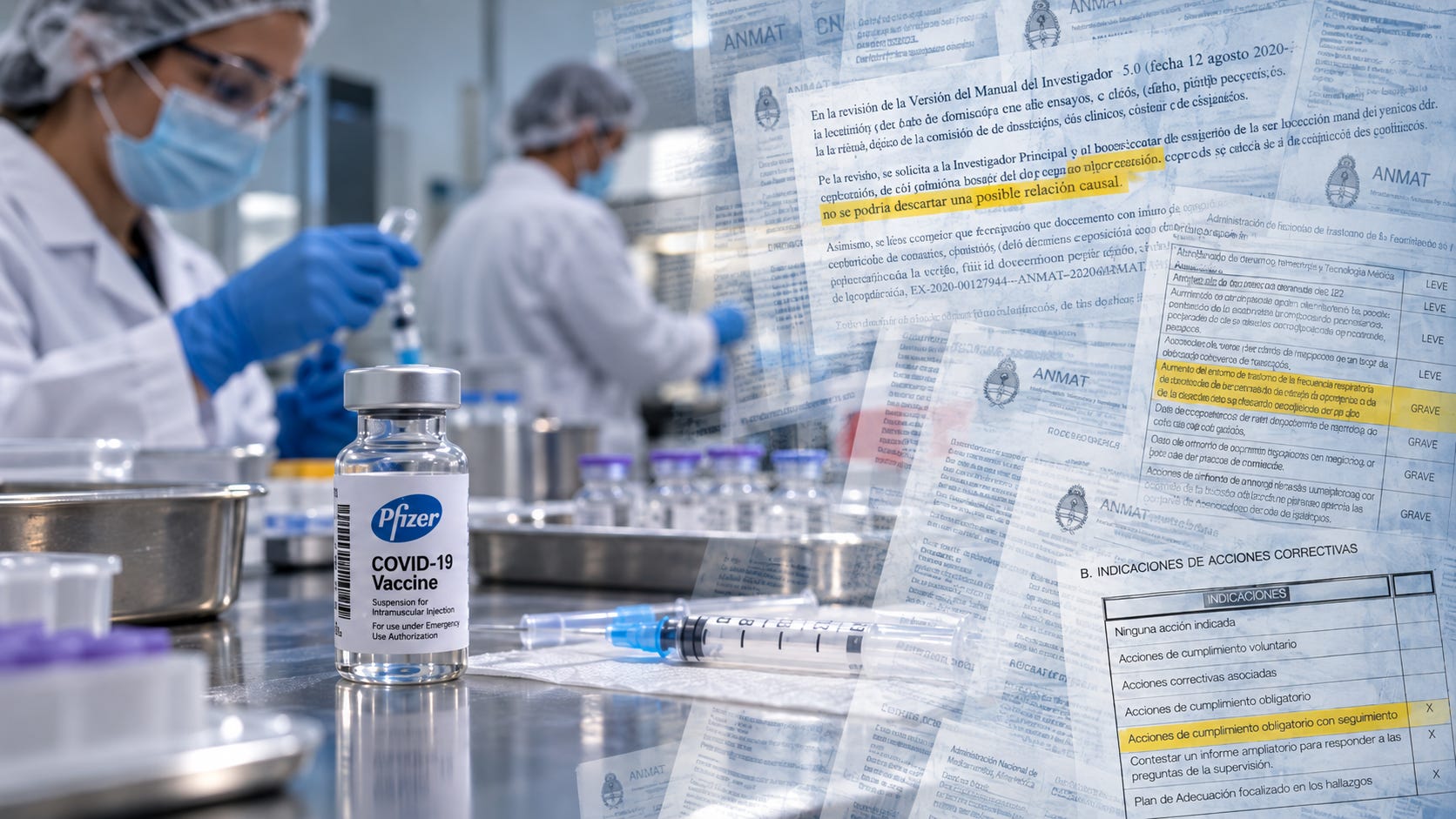
MD Reports has obtained and analysed a trove of Argentinian regulatory and trial documents, together with internal correspondence from the European Medicines Agency, revealing serious failures in the conduct and oversight of Pfizer’s pivotal phase III Covid-19 vaccine trial.
Previously undisclosed records expose medication errors, deficiencies in participant safety monitoring, conflicting assessments of serious adverse events and an independent ethics committee formally sanctioned over failures to protect research participants.
At the centre of the investigation is Site 1231, a hospital in Buenos Aires that recruited nearly 5,800 volunteers — approximately 13% of the entire trial — making it one of Pfizer’s largest research centres.
Argentina’s drug regulator documented 20 findings of non-compliance, but Europe’s medicines regulator later cited those same inspection records as evidence that the site had complied with international standards.
The documents reveal what Pfizer and international regulators knew, how they responded and how the European Medicines Agency ultimately closed its investigation without obtaining the further answers it had sought from Argentina.
Argentina’s blind spot
My 2022 investigation for The BMJ revealed that when the US Food and Drug Administration (FDA) licensed Pfizer’s Covid-19 vaccine in August 2021, it had inspected only 9 of the 153 clinical trial sites — all of them in the United States.

The investigation exposed the FDA’s ‘grossly inadequate’ oversight, following revelations by regional director Brook Jackson, who blew the whistle on misconduct at three Pfizer trial sites in Texas.
Australia’s Therapeutic Goods Administration (TGA) dismissed concerns that the misconduct could affect the trial’s overall results, arguing that the three sites represented only “approximately 2% of the trial population”.
But the problems uncovered in Argentina are difficult to dismiss.
Data from Hospital Militar Central in Buenos Aires — known as Site 1231 and overseen by principal investigator Dr Fernando Polack — contributed substantially to the trial’s reported vaccine efficacy results.

According to the FDA’s 2021 clinical review, 16 of the 81 confirmed Covid-19 cases among vaccinated participants occurred in Argentina — all at Site 1231 — accounting for almost 20% of cases in the vaccine group.
And unlike the data integrity issues raised in Texas, the failures at Argentina’s Site 1231 were formally documented by government inspectors.
Dosing errors and protocol chaos
Trouble surfaced on 11 August 2020, when a volunteer assigned to receive a placebo was mistakenly injected with Pfizer’s experimental vaccine.
The research team discovered the error and contacted Pfizer to correct the participant’s treatment assignment in IMPALA, which is the automated medication allocation system.
But when he returned for his second injection on 3 September, the system again assigned placebo. He was not informed of the mistake until 23 September, more than six weeks after receiving the incorrect injection.
By then, a much larger medication error had already unfolded.
On 23 August, pharmacy staff incorrectly diluted the experimental vaccine, resulting in 52 volunteers receiving approximately 58 micrograms of mRNA instead of the prescribed 30 micrograms — almost double the intended dose.
In a letter to Polack dated 31 August, Pfizer blamed human error, saying the pharmacist or unblinded administrator “did not read the label correctly” before administering improperly diluted vaccine.
The mistake was discovered during routine medication checks by a Pfizer pharmacist, prompting a temporary recruitment hold.
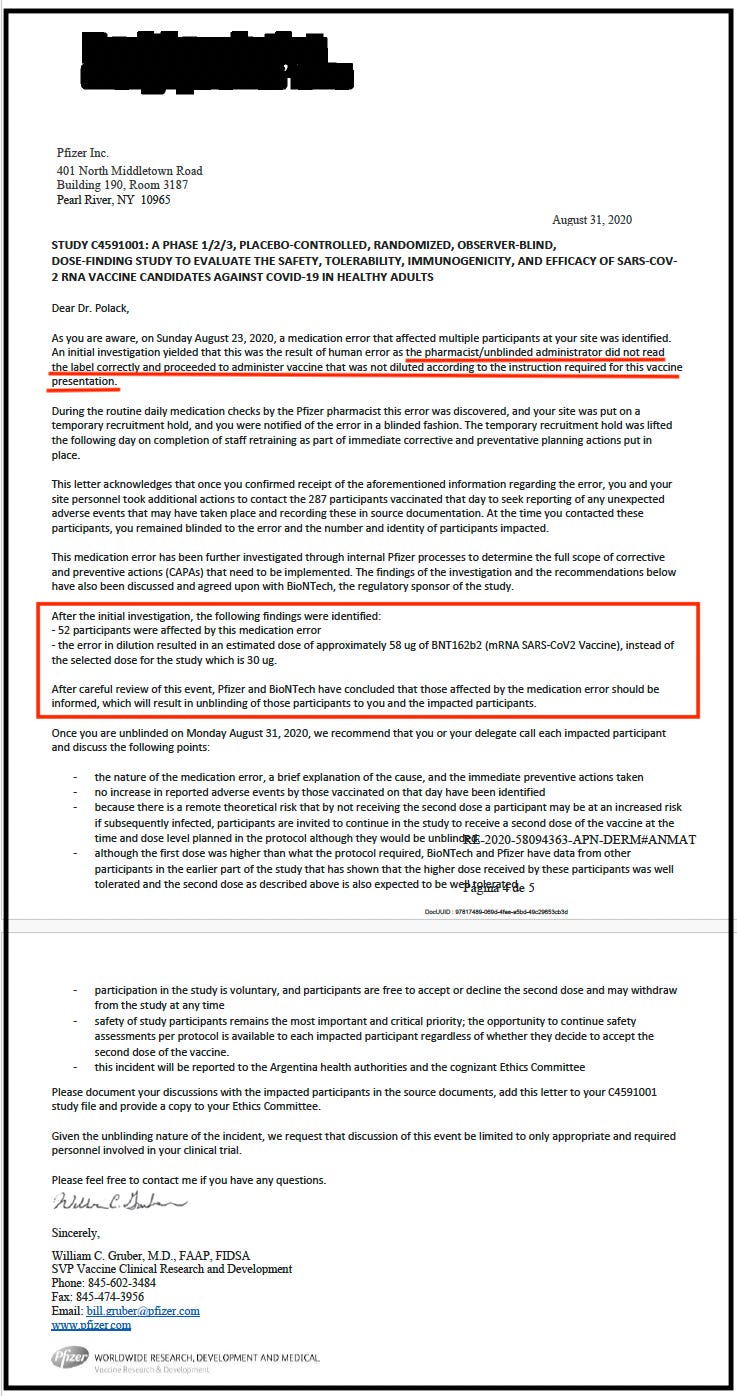
But recruitment resumed the very next day after staff retraining, even as Pfizer continued investigating the incident and considering further corrective measures.
Pfizer said it contacted all 52 volunteers who received the higher dose that same day and found no increase in reported adverse events, although it was too early to rule out complications that might have emerged later.
Pfizer also recommended unblinding affected volunteers so they could decide whether to continue receiving the vaccine.
Argentina’s National Administration of Drugs, Foods, and Medical Devices (ANMAT) was not satisfied.
After questioning Pfizer and the research team about inadequate training and vaccine preparation procedures, the drug regulator ordered them to suspend recruitment again on 9 September until further notice, demanding an informed-consent addendum explaining the risks and benefits of receiving another dose.
When inspectors examined the trial more closely, they uncovered problems extending well beyond medication errors.
20 findings of non-compliance
Between 11 and 23 September 2020, ANMAT inspectors examined the trial’s medical records, consent procedures, staff qualifications, medication handling and adverse-event reporting.
The findings were damning. Inspectors documented 20 instances of non-compliance.
Some medical staff had expired professional licences or lacked documented national registration. Informed-consent records contained inconsistencies, including discrepancies between those signing the forms and those recorded as conducting the consent discussions.
Inspectors also found pre-prepared medical-record templates and participants recorded as eligible before pregnancy testing had been completed.
Serious adverse-event reporting was deficient. A pneumonia case had been reported late to the ethics committee, an appendicitis case had been documented retrospectively, and medical records for other serious adverse events were incomplete.
ANMAT did not treat these as minor administrative mistakes.
Its inspectors issued an Indicación de Acción Oficial — Official Action Indicated — classification to both Polack, the principal investigator, and to Pfizer’s local operations liaison.
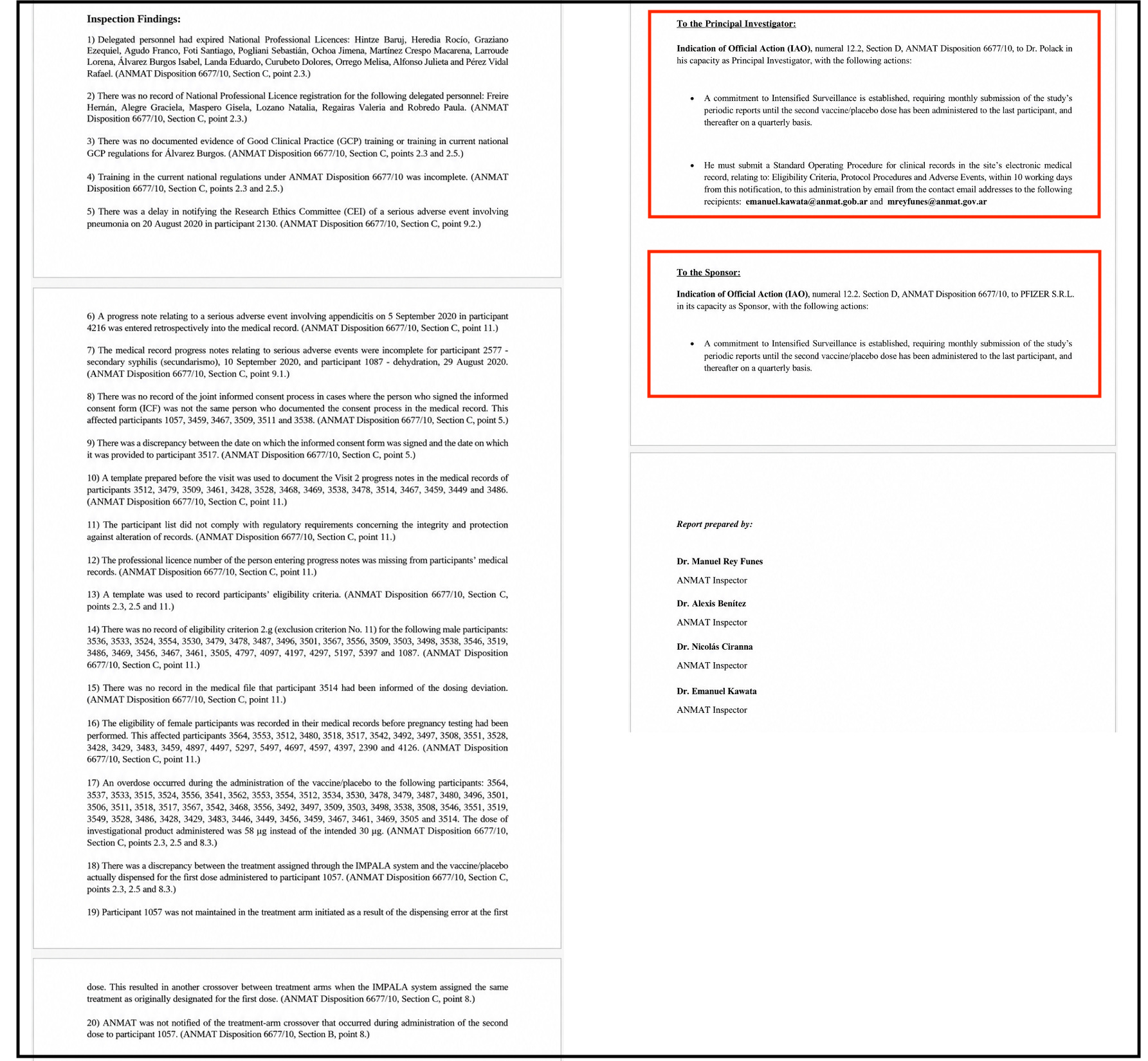
ANMAT ordered corrective measures and intensified surveillance, requiring monthly progress reports until participants received their second doses, followed by quarterly reporting.
Polack was also instructed to introduce new standard operating procedures for documenting eligibility assessments, study procedures and adverse events.
The lawyer who challenged Pfizer
Augusto Roux was a 36-year-old Argentinian lawyer who volunteered for Pfizer’s trial at Site 1231.
He received his second injection on 9 September 2020 and soon developed fever, muscle pain, headache and other systemic symptoms. Roux was admitted to Hospital Alemán in Buenos Aires on 12 September, where he remained for a couple of days.
His hospital records documented a negative Covid-19 PCR test and described his illness as an “adverse reaction to coronavirus vaccine (high probability).”
But Pfizer’s trial records told a different story.
On 14 September, Roux’s hospitalisation was recorded as bilateral pneumonia, considered unrelated to vaccination. Two days later, a study doctor attributed his fever to severe vaccine reactogenicity.
Polack rejected that assessment. On 17 September, he classified Roux’s illness as suspected Covid-19, unrelated to vaccination.
Pfizer then intervened, updating the adverse-event term to “COVID disease” on 7 October at the Sponsor’s request, and revising it to “Suspected COVID-19 disease” two days later.
The shifting classifications had serious financial consequences for Roux. Before joining the study, he had signed an informed-consent form promising that Pfizer would cover medical treatment for injuries related to vaccination or participation in the trial.
The agreement stated, “Pfizer will cover the costs of medical care and treatment.” It also identified an insurance policy taken out by Pfizer to cover such injuries.
But Pfizer declined to cover Roux’s medical expenses, arguing that his illness was unrelated to vaccination. So, he was left to pay the bills himself, despite his treating hospital having considered a vaccine reaction highly probable.
Following a complaint from Roux, ANMAT investigated and found that important hospital documents had not been properly incorporated into the trial records.
In December 2020, the regulator directed Pfizer and Polack to reconsider causality, stating that “a probable causal relationship could not be ruled out.”
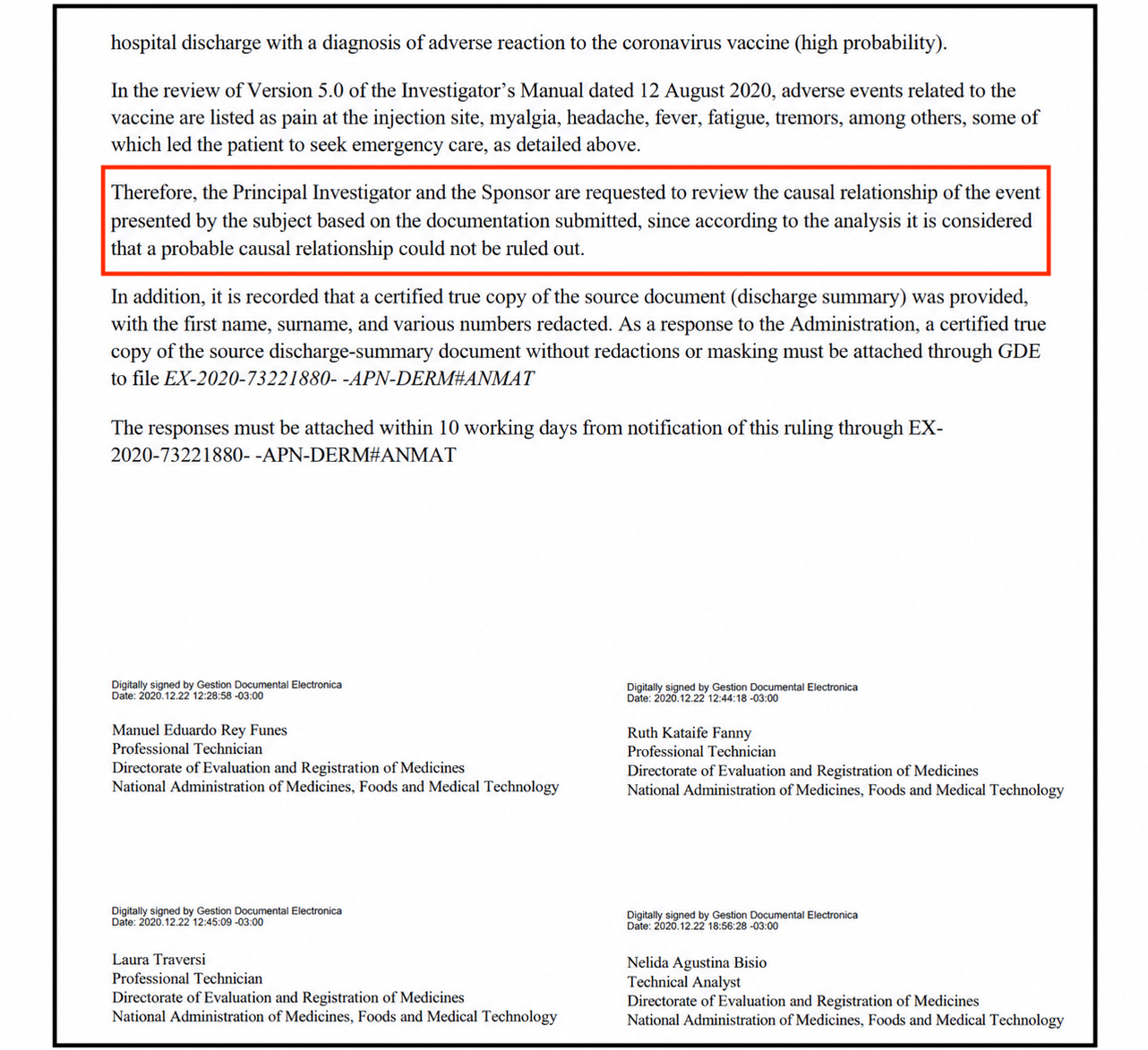
Pfizer and Polack nevertheless maintained that Roux’s hospitalisation was unrelated to vaccination.
When enforcement became voluntary
When ANMAT concluded its investigation into Roux’s case in February 2021, it identified three further deficiencies involving serious adverse-event records, including inconsistencies in their chronology and medical documents that were missing or added retrospectively.
But this time, the regulator took a softer approach.
Unlike its earlier inspection of Site 1231, which resulted in formal regulatory action against Pfizer and Polack, ANMAT issued an Indication of Voluntary Action, calling on both to improve documentation and safety monitoring.
Despite having challenged their assessment of Roux’s illness, ANMAT did not resolve the disagreement over whether his hospitalisation was vaccine-related or who should pay his medical expenses.
Roux subsequently pursued the matter through Argentina’s judicial system, challenging the handling of his medical records and the conduct of the trial – that case is ongoing.
Serious ethics failures
The problems at Site 1231 extended beyond the researchers. Even the independent ethics committee entrusted with protecting volunteers came under government investigation.
In March 2021, the Buenos Aires Ministry of Health investigated CIREC, the hospital’s ethics committee responsible for overseeing Pfizer’s trial.
Inspectors uncovered serious failures involving conflicts of interest, irregular approval procedures and inadequate monitoring of participant safety.
Two committee members, Drs Gustavo Casado and Sergio Gelman, were also co-investigators in Pfizer’s study. Their conflicts of interest were not declared until 5 August 2020, after the committee had purportedly approved the trial.
This raised serious questions about the committee’s independence. Researchers conducting Pfizer’s trial were also sitting on the very committee responsible for scrutinising its conduct.
A separate financial relationship also warranted scrutiny.
Polack, the trial’s principal investigator, was also president of iTrials, a company involved in running Pfizer’s study at the hospital.
The trial agreement listed iTrials as a recipient of payments for its role in the research. Polack also disclosed receiving income from Pfizer and owning shares in iTrials in a 2021 scientific publication.
In other words, Polack was not only overseeing Pfizer’s trial — he also had a financial stake in a company being paid to help run it.
The most serious findings, however, concerned the committee’s failure to protect volunteers once the trial was under way.
Inspectors found that reports of serious adverse events and departures from the trial protocol were being received without adequate assessment or follow-up.
The government’s preliminary report was explicit: “SAE REPORTS, SAFETY: they are received, but not analysed.”
Even the incident in which 52 volunteers received almost double the intended vaccine dose had been reported without adequate subsequent follow-up.
Further deficiencies involved the handling of pregnancy reports, miscarriages and a lack of follow up on a participant’s death, subsequently confirmed to involve a placebo recipient.
The Buenos Aires government classified multiple failures as GRAVE — serious, highlighting the committee’s “inaction of the CEI in the face of irregularities liable to put at risk a vulnerable population or persons in a situation of vulnerability under research.”
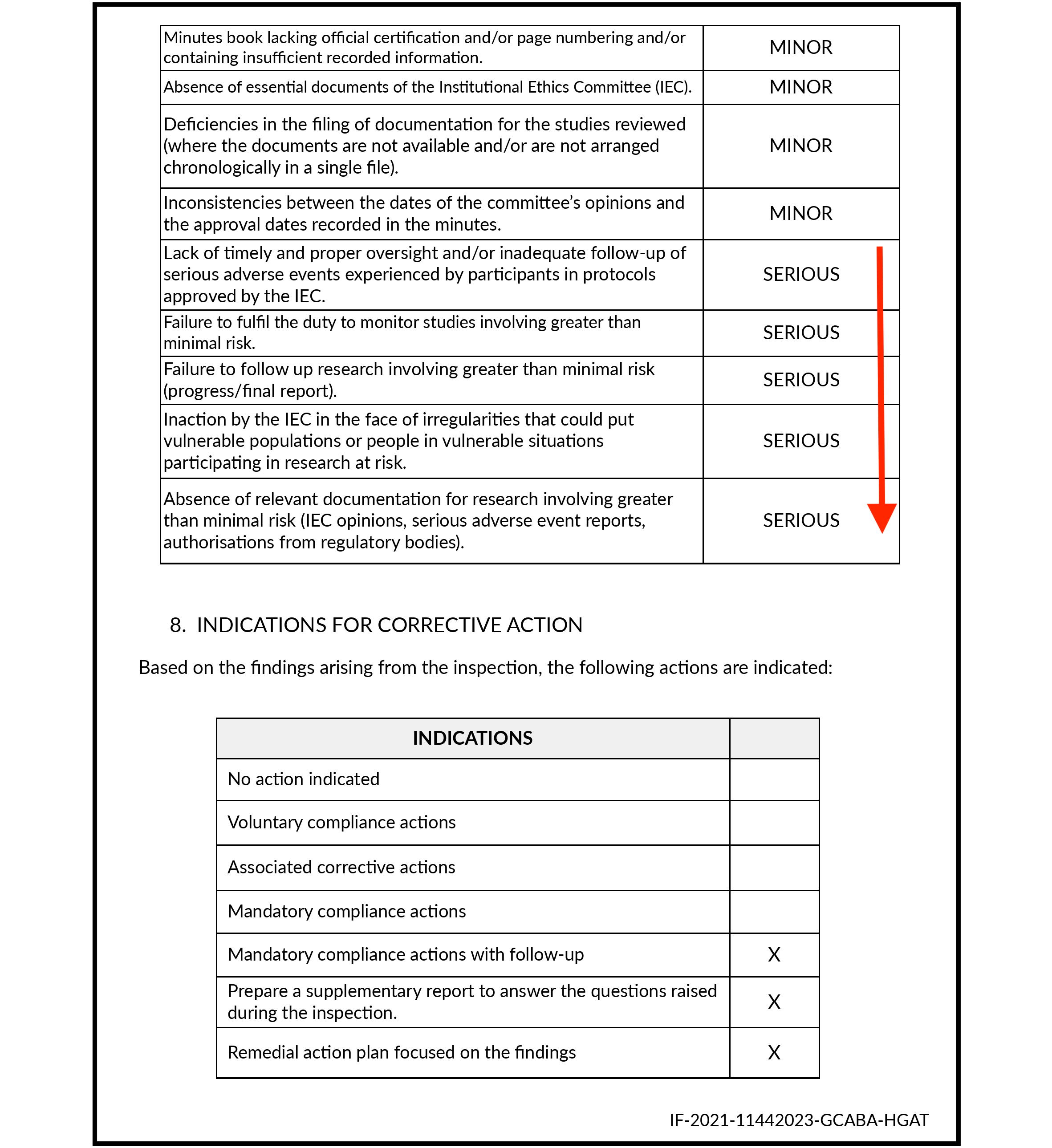
On 27 May 2021, authorities provisionally revoked CIREC’s accreditation for 90 days over serious ethical violations, preventing it from approving new research projects.
Although the committee introduced corrective measures and regained its accreditation in August, it was permitted to continue supervising research already under way — including Pfizer’s trial — even while suspended from approving new studies.
What Europe’s regulator knew — and ignored
Internal correspondence obtained by MD Reports shows that the European Medicines Agency (EMA) was questioning Argentina’s regulator, ANMAT, about Site 1231 as early as November 2020, while reviewing Pfizer’s vaccine for European authorisation.
EMA wanted to know what inspectors had uncovered, what corrective action had been ordered and whether the problems had been resolved.
In March 2021, the agency received a formal complaint from Roux, alleging irregularities in adverse-event reporting and questioning the reliability of the trial data. His treating doctors had linked his illness to vaccination, but Pfizer’s investigators had classified it as unrelated.
In June 2021, EMA requested a complete list of adverse events and serious adverse events from Site 1231, including their severity, suspected causes and outcomes.
The agency was still seeking answers in 2023, requesting an update from ANMAT on 4 July followed by a reminder on 4 August, but neither received a response.
By 25 August, EMA officials were discussing closing Roux’s complaint.
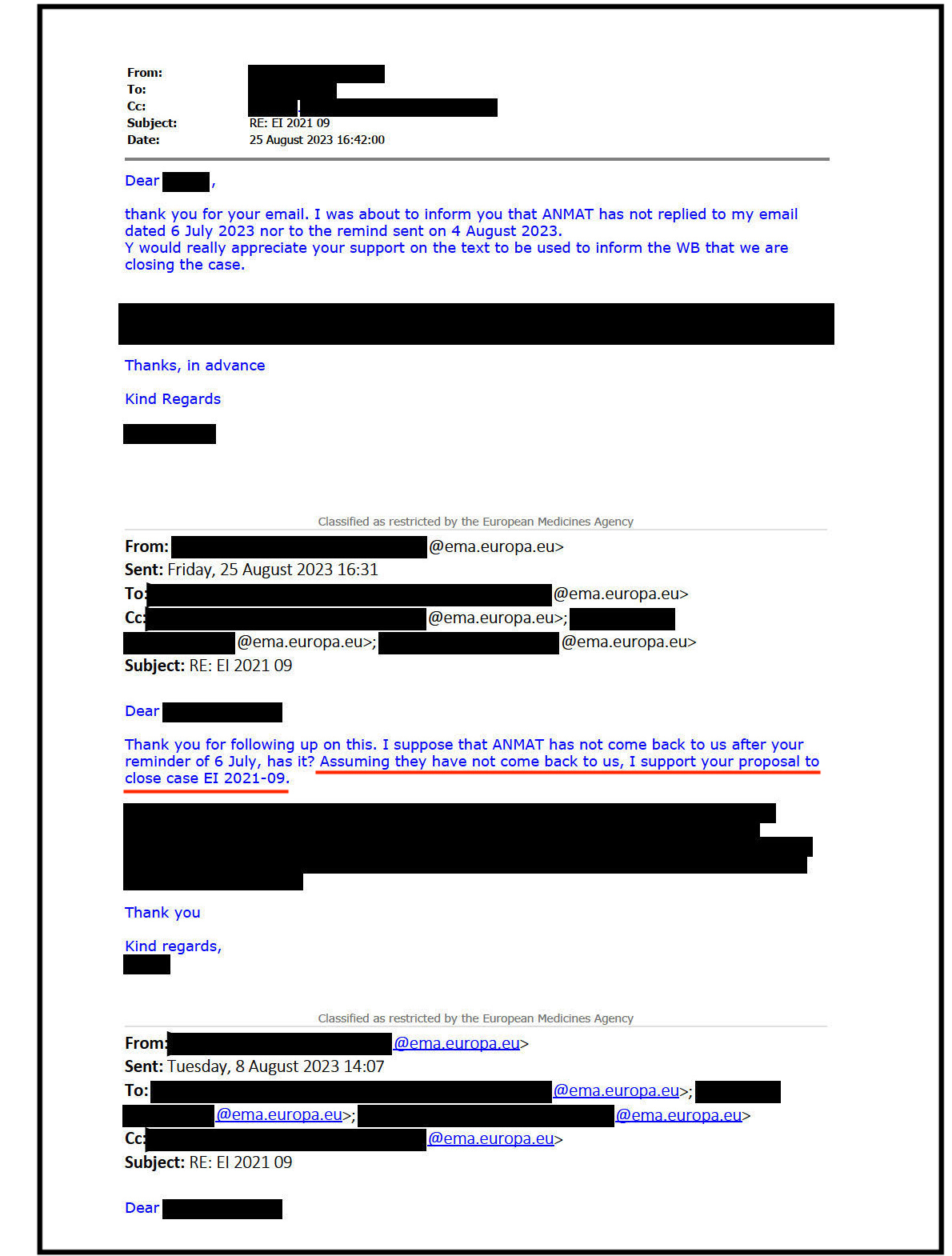
On 12 September 2023, EMA closed the complaint, acknowledging that it had received no further information or action from ANMAT concerning his allegations.
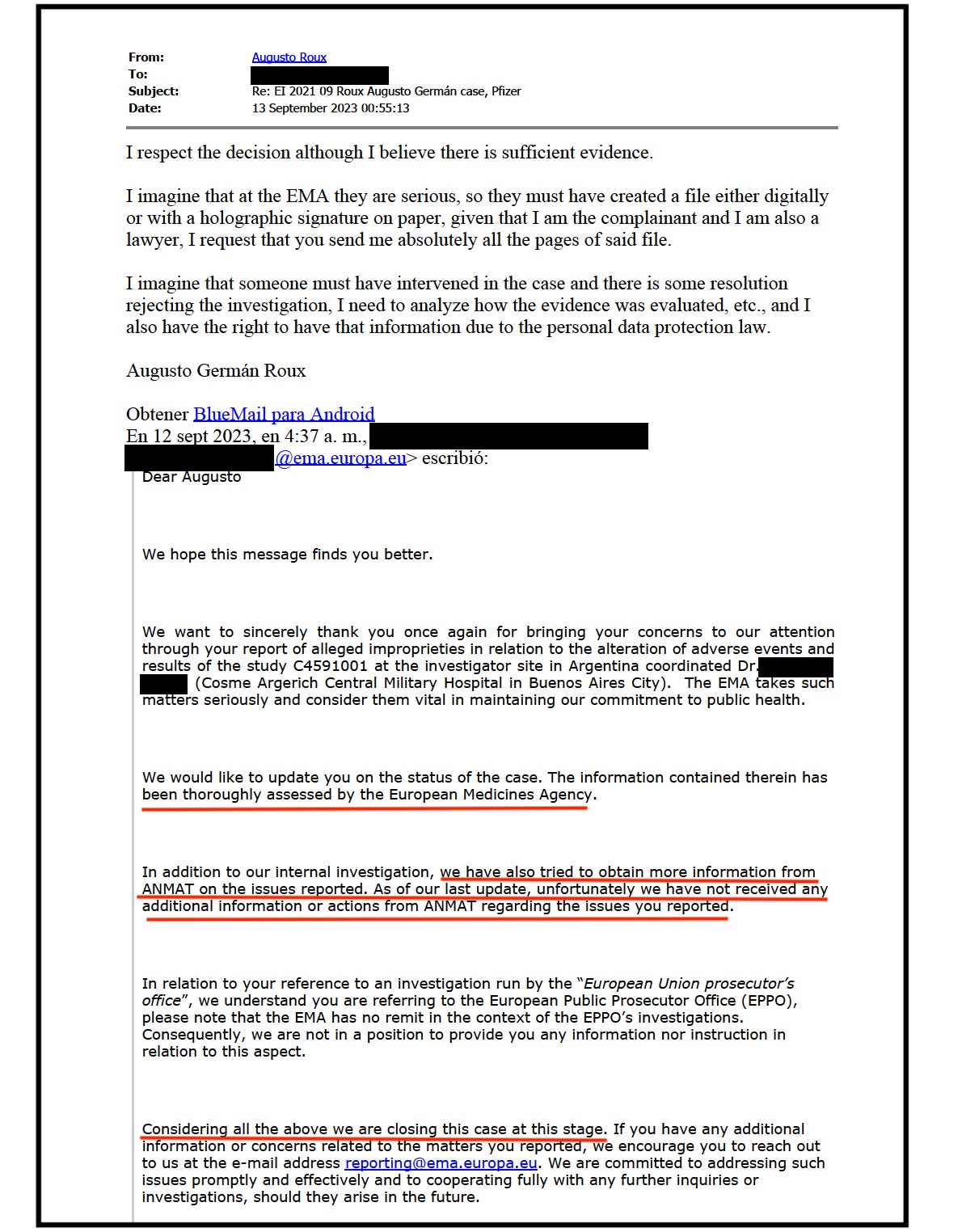
When EMA released its full investigation files to Roux in January 2026, the agency acknowledged that no response to its request to ANMAT had been identified among the disclosed documents.
Instead, EMA stated it had examined EudraVigilance, Europe’s database of suspected adverse drug reactions, and concluded that further information from Pfizer was unlikely to be useful.
EMA defended its decision to close the investigation, claiming ANMAT’s inspections had “confirmed to a sufficient degree that the study was conducted at the site in compliance with GCP standards and respecting participants’ rights.”
What about accountability?
ANMAT’s records leave unanswered whether corrective measures were independently verified, but Europe’s medicines regulator has even more to answer for.
EMA knew that Argentina’s inspectors had documented 20 findings of non-compliance at one of Pfizer’s largest trial sites. It repeatedly sought further information from ANMAT, received no response to its final requests and closed Roux’s complaint anyway.
It then cited those same inspection records as evidence that the site had complied with Good Clinical Practice standards.
MD Reports has sought responses from the regulators and other parties involved. Their replies, along with further findings, will be reported as the investigation continues.
Great reporting. Yet more scary information about cover ups to protect money and reputation
Have they no conscience?
Many thanks Maryanne
Naughty, Naughty....Very Naughty 😵💫