

When Cochrane released two new reviews on the HPV vaccine last week, the message was delivered with unusual force.
The organisation — long regarded as a gold standard in evidence appraisal — announced that the vaccine provides “strong and consistent evidence” of preventing cervical cancer.
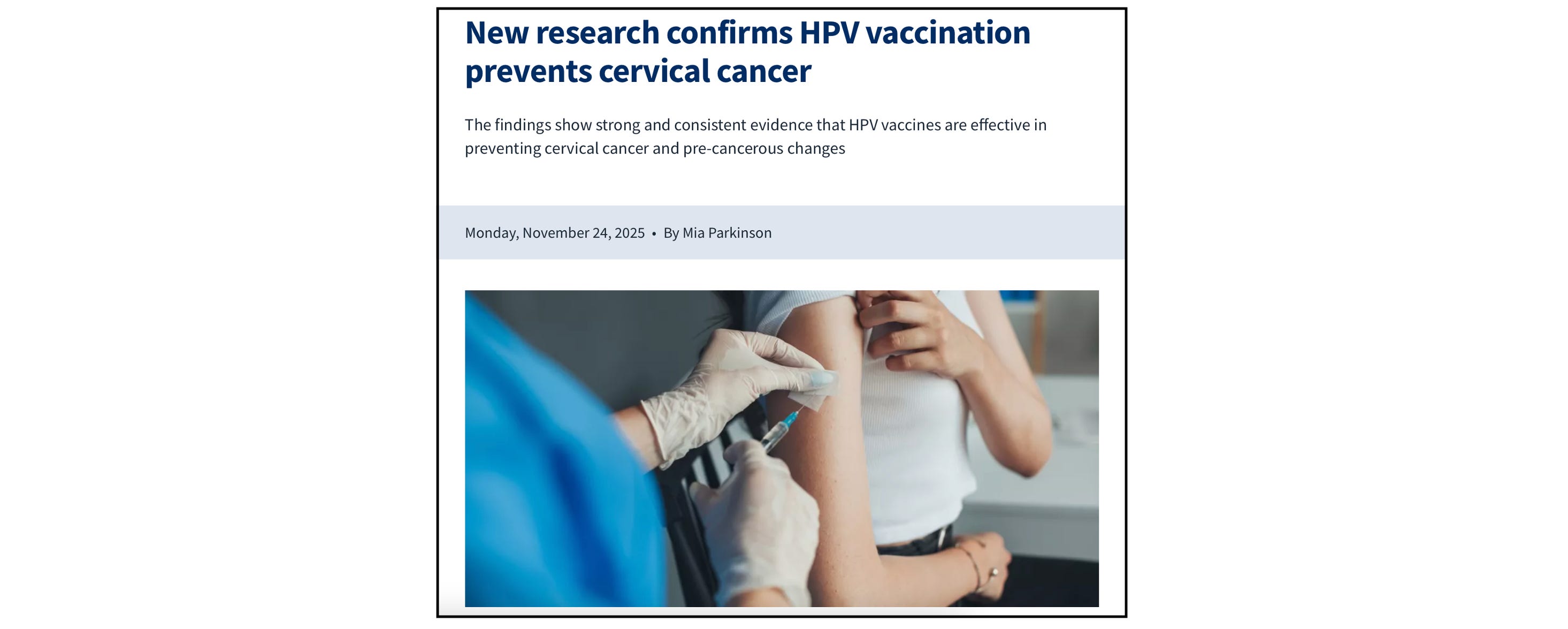
Its press statements went further. Cochrane claimed that girls vaccinated before age 16 were “80% less likely” to develop cervical cancer than their unvaccinated counterparts.
Major news outlets and academics on social media repeated the figure, reinforcing the impression that the science was now settled.
Lead author Dr Nicholas Henschke declared that “we now have clear and consistent evidence from around the world that HPV vaccination prevents cervical cancer.”
Senior author Dr Jo Morrison said the reviews “make it clear” that vaccinating young adolescents “can prevent cancer and save lives.”
While the confidence was absolute, the evidence was anything but.
My analysis of the two reviews shows that Cochrane’s headline claim relies on observational data that are inherently at high risk of bias — not the rigorous evidence suggested by its public messaging.
What emerges is a widening gap between the sober conclusions inside the reviews and the sweeping claims made to the public.