


When Moderna and Merck announced yesterday that their experimental mRNA cancer treatment had succeeded in a major Phase III melanoma trial, the response was immediate.
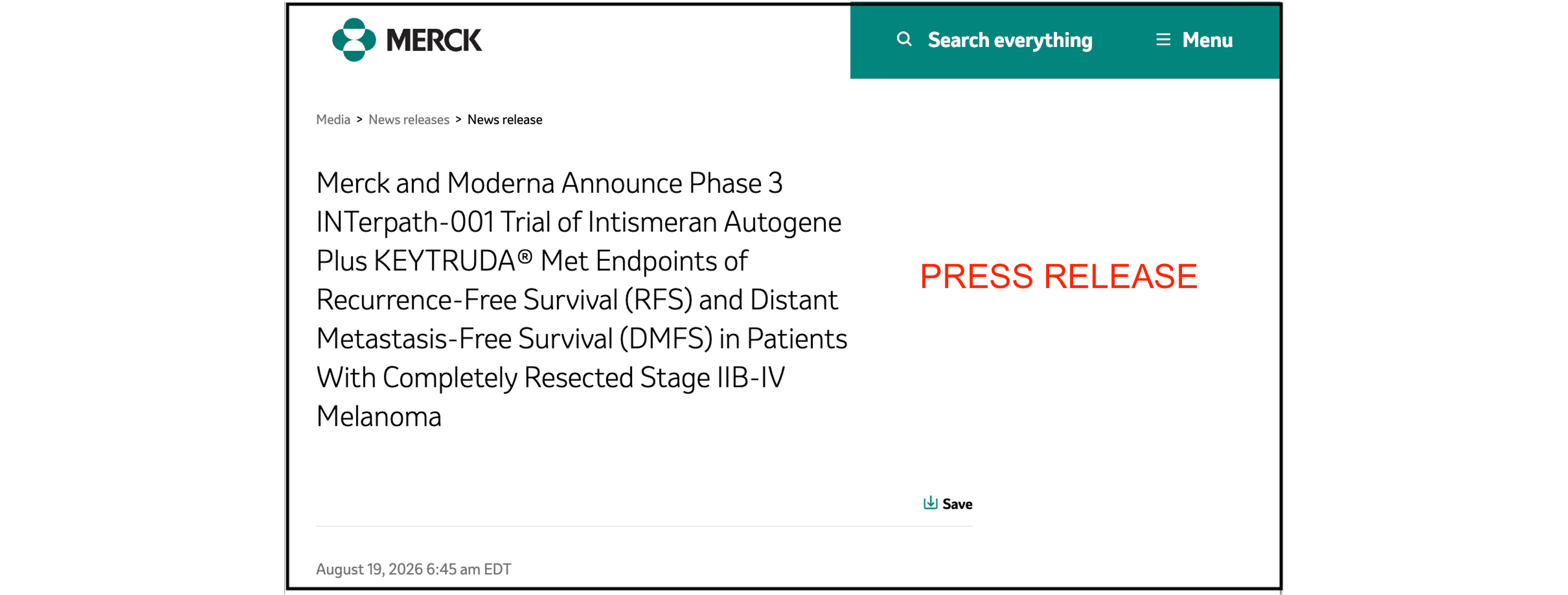
The companies called it a “landmark moment”—the first successful late-stage trial of an mRNA-based cancer treatment. News reports heralded a breakthrough. Elon Musk even declared that “synthetic RNA will cure many diseases.”
Investors were equally enthusiastic. Moderna and Merck’s market values surged, adding approximately $86 billion between them in a single trading session.
But amid the celebration, something important was missing.
The data!
No Phase III results have been published in the peer-reviewed literature, and none have been posted to ClinicalTrials.gov.
Instead, all the excitement rests on a company press release.
Moderna and Merck said the trial showed “statistically significant and clinically meaningful” improvements in preventing melanoma from recurring and spreading to distant organs.
But they have not disclosed how many patients experienced a recurrence, how large the absolute benefit was, whether it differed by disease stage, or how many patients stopped treatment because of adverse events.
The result may turn out to be impressive. But right now, we are being asked to celebrate a “breakthrough” that nobody outside the companies can properly scrutinise.
Not the “vaccine” most people imagine
Despite being widely described as a “cancer mRNA vaccine,” Moderna’s intismeran is an experimental treatment for people who have already had high-risk melanoma surgically removed.
Although they may have no detectable cancer remaining, microscopic cancer cells can survive and later cause the disease to return.
Intismeran is custom-made for each patient.