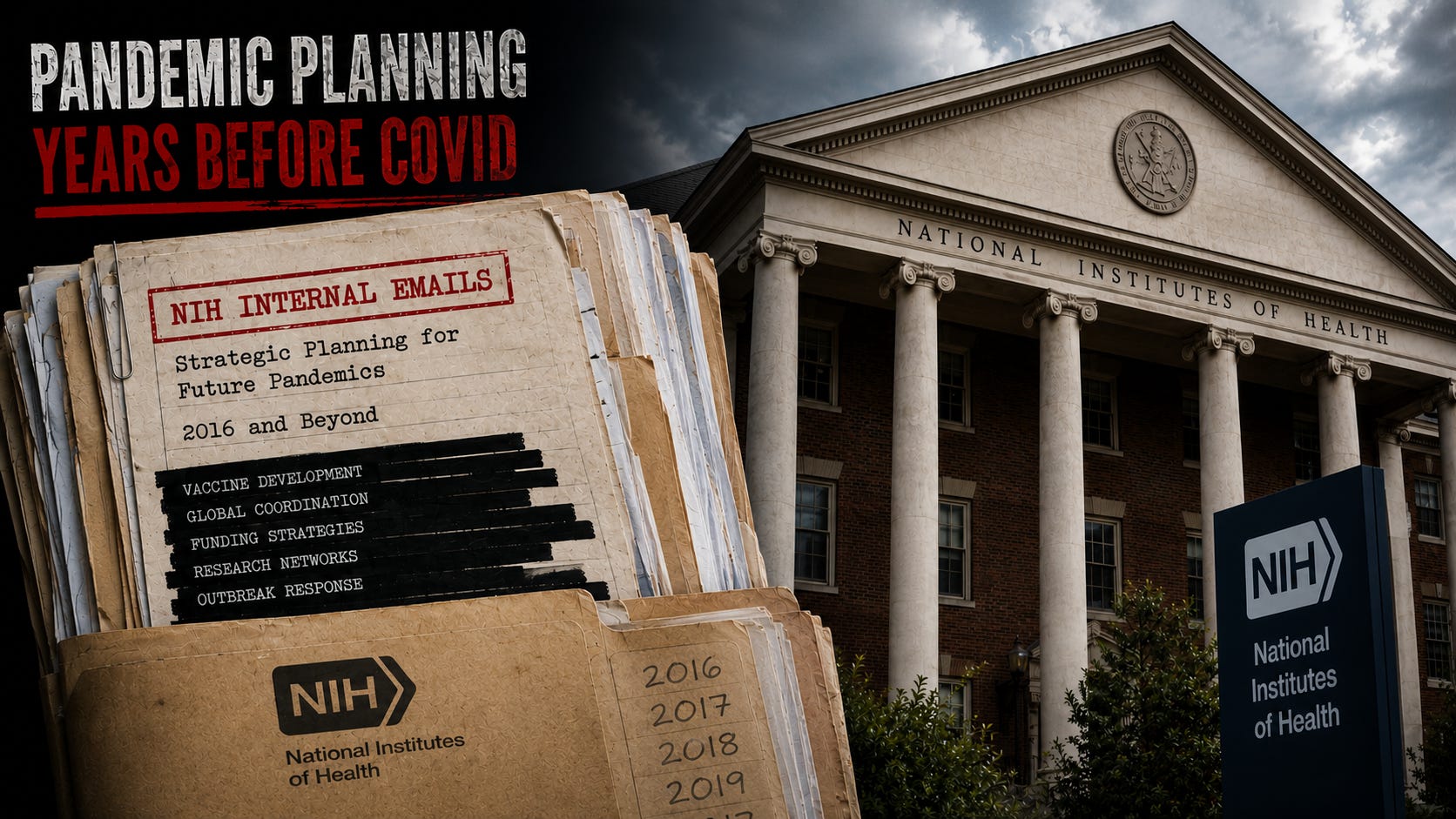
NIH internal emails reveal pandemic planning years before Covid
By the time Covid emerged in 2020, many of the global health power players moved seamlessly into roles they had spent years preparing for.
A cache of internal emails obtained from within the US National Institutes of Health has exposed years of strategic planning for future pandemics involving governments, foundations, international organisations, and pharmaceutical companies.
The documents, stretching back to at least 2016, show that Dr Francis Collins, Director of the NIH from 2009 to 2021, was at the centre of these efforts.
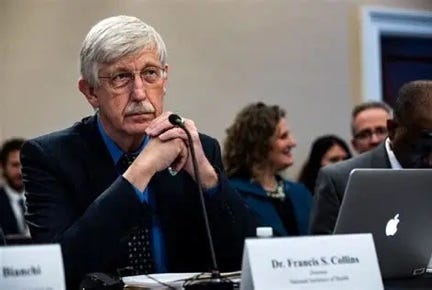
In that role, he oversaw the allocation of the agency’s substantial research budget, which ran into tens of billions of dollars annually.
The emails reveal Collins working closely with the Gates Foundation, Wellcome Trust, World Bank, World Economic Forum, the African Academy of Sciences, and major pharmaceutical companies to strengthen research infrastructure, regulatory readiness, and international coordination well before Covid appeared.
For the public, the Covid response was presented as an unexpected crisis. Governments appeared to be making difficult decisions while navigating profound uncertainty.
But these emails tell a different story.
Many of the same organisations that later shaped the Covid response had already spent years building capacity, influence, and institutional power under Collins’ leadership.
Billions of dollars flowed through the sprawling network. Careers were built around it, reputations depended on it, and political and financial interests became invested in its success.
By the time Covid arrived, much of the framework was already in place.
Building the machinery
The planning gained momentum after the 2014-16 Ebola outbreak highlighted gaps in global preparedness. Vaccines took too long to develop, trials were hard to organise, and funding was fragmented.
The response, according to the emails, was to build permanent capacity in advance rather than react after the fact.
One major outcome was the launch of the Coalition for Epidemic Preparedness Innovations (CEPI) in 2017 at the World Economic Forum (WEF), which hosts an annual gathering of globalist elites in Davos, Switzerland.
CEPI focused on vaccines against emerging infectious diseases and became a key part of pandemic planning alongside the NIH and major foundations.
During Covid, CEPI became one of the major funders of vaccine development, investing hundreds of millions of dollars in multiple vaccine platforms that eventually led to vaccines from companies such as Moderna.
The internal documents show there was particular focus on expanding research capacity in Africa, a region long criticised for weak regulatory oversight and less stringent enforcement of clinical trial standards.
Collins chaired a 2017 WEF meeting on building a sustainable biomedical research enterprise in Sub-Saharan Africa.
The call brought together senior figures from the Wellcome Trust and other partners to advance plans for major new investment, including a proposed $10 billion African science, technology and innovation fund.
Collins appeared keen to ensure there was no confusion about who was in charge. After one teleconference with the WEF he wrote to his NIH colleagues:
“In the last call there was a bit of confusion about who was leading (NIH or WEF). I think this time it should be me. Agree?”
By 2018, senior pharmaceutical executives were discussing long-term investments in infrastructure designed to endure well beyond any single outbreak.
One project focused on SMART Vaccines, a decision-support tool designed to help governments and funders systematically prioritise vaccine candidates and guide investment decisions ahead of future outbreaks.
Workshops for the project brought together a who’s who of global health institutions, government agencies, philanthropic foundations, vaccine manufacturers, and international organisations.
The language of the initiative emphasised “consensus-building” and “public-private partnerships,” to keep major organisations and stakeholders in lockstep—many of whom would later play influential roles during Covid.
By 2019, the core elements of modern pandemic preparedness were already in place.
Covid emerges
When Covid emerged in early 2020, many of these organisations stepped directly into the roles they had spent years preparing for.
CEPI directed major vaccine funding. The Gates Foundation supported financing and distribution efforts. The World Bank mobilised resources. The WHO coordinated international guidance, and so on.
In turn, societies were locked down, people were ordered to wear face masks, and told to wait for vaccines.
In October 2020, three epidemiologists—Jay Bhattacharya, Sunetra Gupta, and Martin Kulldorff—authored the Great Barrington Declaration, arguing against broad lockdowns and favouring more targeted protections for vulnerable populations.
The declaration effectively challenged the centralised, top-down model that Collins and his network had spent years building.
Collins responded by leveraging the authority of the NIH to marginalise dissenting scientists and called for a “quick and devastating published takedown” of the declaration and its authors.
Taken together, these emails show that Covid was not the beginning of the story. It was the moment years of planning, investment, and institution-building were set in motion.
That system influenced how resources were allocated, which policies were pursued, and how dissent was managed.
Years later, we are still living with the unintended consequences of those decisions.


Slowly but surely, the truth is revealed! Keep shining the torch 🔦 Doc MaDem.
There’s preparation and there’s preparation— why the sharp focus on vaccines which are impossible to create on the fly as opposed to quarantine which can be implemented very quickly? I think that we know the answer to that— it’s in the part where they squelch dissent. The WEF, the globalists, everything that they do is to accrue power for themselves, same deal with the Green agenda. Remember what politicians like Mark Carney were saying at the time, that the pandemic was an opportunity to execute the “Great Reset.” How can we think that this was not just a big power play? Whatever happened to contingency planning? J’accuse and so do a lot of other people.