

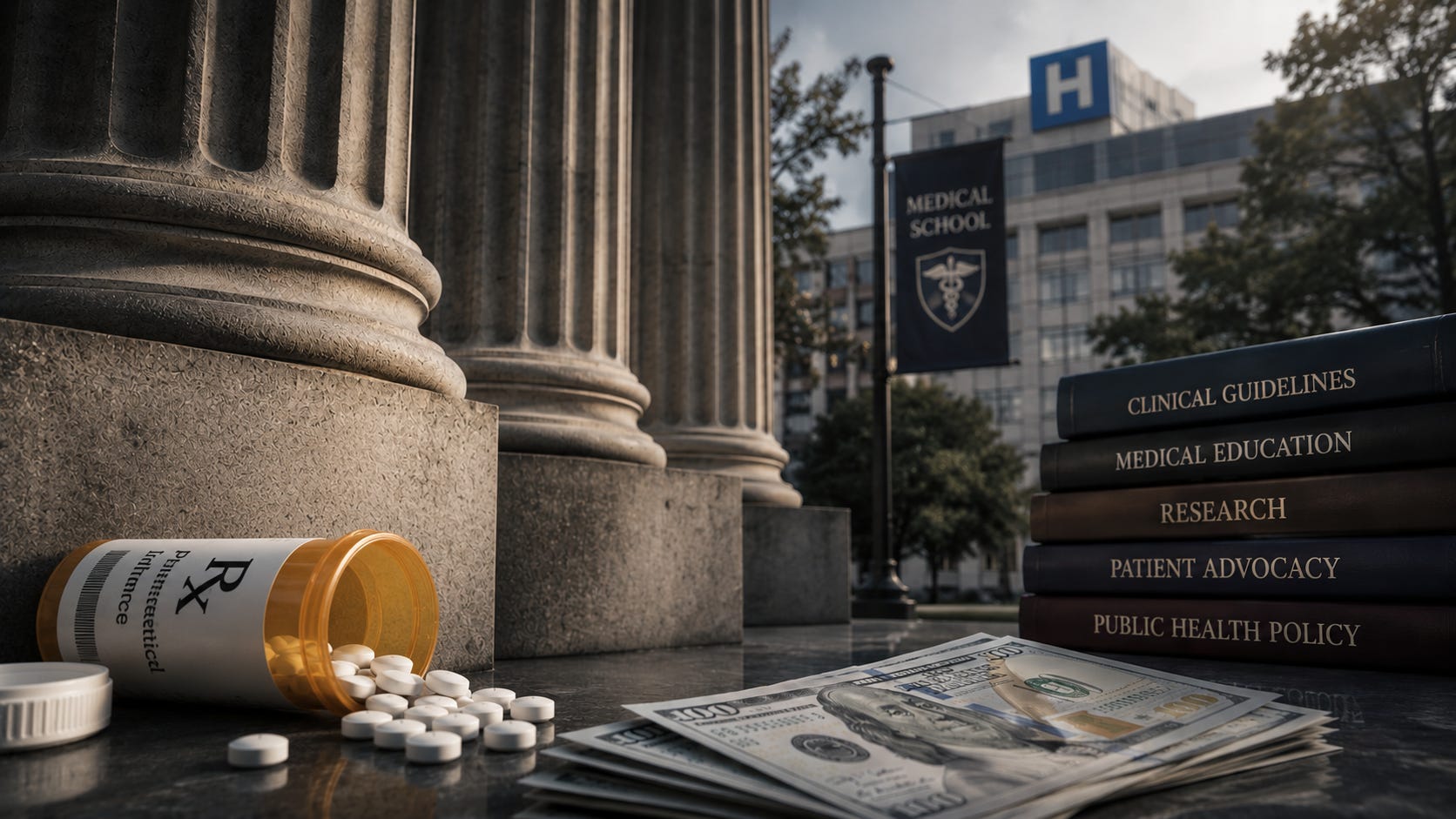
The old pharmaceutical bribe was easy to recognise. Drug company reps flew doctors to luxury resorts, paid for lavish dinners, disguised kickbacks as consulting fees, and funded educational events that were little more than sales pitches.
A recent academic review published in the Journal of Law, Medicine & Ethics examined over two decades of bribery cases, uncovering repeated patterns of sham consulting contracts, fake educational events, luxury travel, and hidden payments.
The U.S. Department of Justice has repeatedly prosecuted industry giants—Pfizer, Merck, GlaxoSmithKline, Johnson & Johnson, Eli Lilly, and Purdue Pharma—resulting collectively in tens of billions of dollars in settlements and penalties.
Yet despite decades of high-profile prosecutions, Big Pharma’s influence over medicine has not disappeared — it has simply evolved.