

In January 2024, headlines erupted worldwide.
“No cervical cancer cases in HPV-vaccinated women,” declared the BBC, hailing a landmark breakthrough from Scotland.
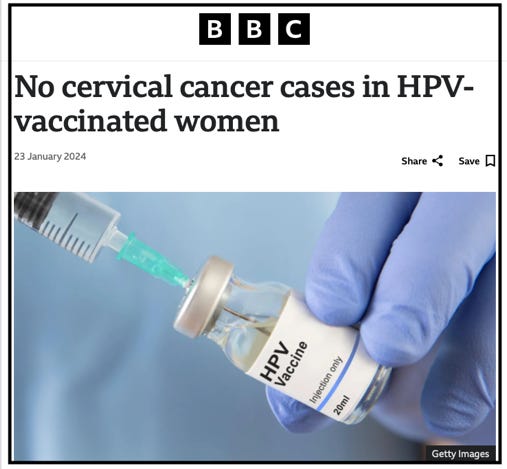
A study in the Journal of the National Cancer Institute claimed that girls who received the HPV vaccine at age 12 or 13 had not developed a single case of cervical cancer.
Doctors called it a public health triumph. The media called it proof the vaccine “saves lives.” And the story went viral.
But what if that extraordinary claim wasn’t what it seemed?
More than 18 months later, two Australian researchers went back to the raw data — and what they found upends the story entirely.
The promise of “zero cancers” in Scotland may not have been a miracle at all… but something far more troubling - a statistical illusion.
The Scottish study that made headlines
Led by Dr Tim Palmer, the observational study tracked hundreds of thousands of women through national health records, linking HPV vaccination history to cervical cancer diagnoses.
The standout result was striking — among girls vaccinated at 12 or 13, not a single case of invasive cervical cancer had been detected.

Public health officials seized on the finding. Palmer’s team was praised for producing what many saw as definitive proof the HPV vaccine prevents cancer.
But the celebration was premature.