

Newly recovered communications from Anthony Fauci’s government phone have exposed what senior U.S. health officials knew about Covid-19 vaccine injuries in the earliest months of the rollout.
They also reveal how calculated they were in concealing the systemic flaws in their own safety monitoring.
The documents, part of a cache released by Senators Ron Johnson and Rand Paul following an investigation into Fauci’s pandemic-era communications, directly contradict years of official assurances.
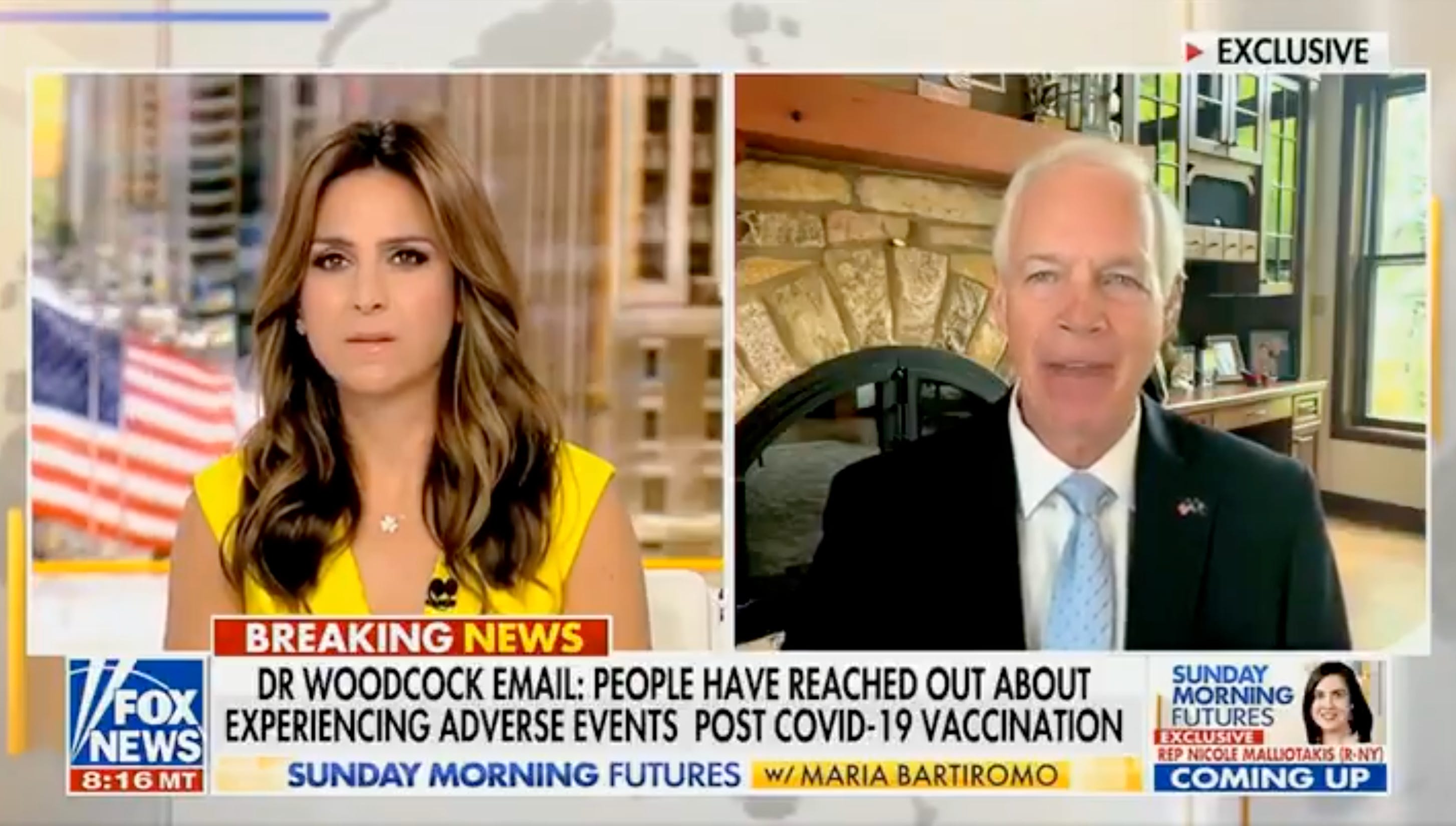
Following the release, Senator Johnson did not mince words.
“They kept saying no red flags, no safety signals,” he told Fox News. “They lied through their teeth to the American public.”
The surveillance myth
In March 2021, FDA vaccine chief Dr Peter Marks told Congress that the agency had implemented a surveillance system using “state-of-the-art technologies,” capable of detecting safety findings “in a relatively rapid manner.”
The CDC echoed that confidence, assuring the public that Covid-19 vaccine monitoring was the “most intense and comprehensive” safety program the country had ever built.
But behind closed doors, leadership knew those very systems had major blind spots.
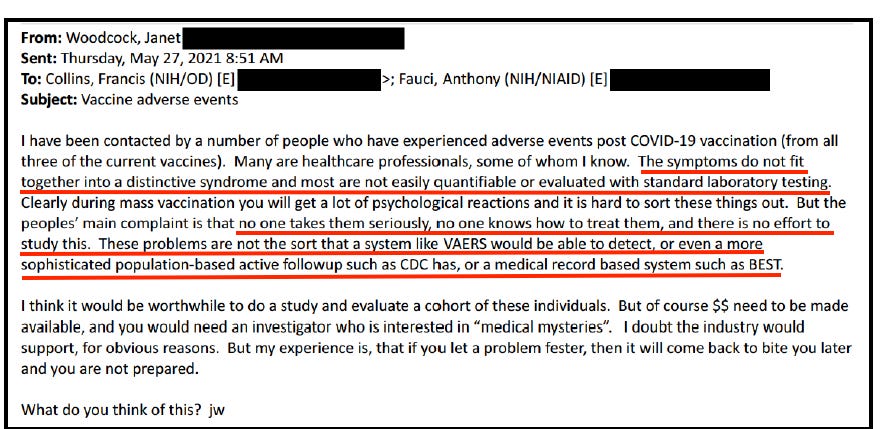
On May 27, 2021, Dr. Janet Woodcock—then Acting Commissioner of the FDA—sent a confidential email sounding the alarm to Fauci and NIH Director Francis Collins.
Woodcock was being contacted directly by people suffering unexplained health problems after receiving one of the three authorised vaccines. Many were healthcare workers. Some she knew personally.

Their symptoms were complex, debilitating, and often difficult to evaluate with standard laboratory testing. Crucially, Woodcock warned that the very surveillance systems officials were relying on to reassure the public might fail to detect what was happening.
“These problems are not the sort that a system like VAERS would be able to detect, or even a more sophisticated population-based active follow-up such as CDC has, or a medical record-based system such as BEST,” she wrote.
In other words, Woodcock was warning that the federal safety net had a gaping hole. She doubted vaccine manufacturers would investigate “for obvious reasons” and urged Fauci and Collins to launch a dedicated cohort study.
People were suffering, she wrote, and their primary complaint was that “no one takes them seriously, no one knows how to treat them, and there is no effort to study this.”
“If you let a problem fester, then it will come back to bite you later and you are not prepared,” warned Woodcock.
Fauci’s response made clear the warning had registered.
“Janet asks what we think of this?” he wrote to Collins the next day. “We cannot ignore her. We should probably bring in CDC and see what Rochelle [Walensky] thinks.”
But publicly, officials continued to reassure Americans about the strength of vaccine safety surveillance. Privately, patients were still struggling to have their injuries recognised.