

For decades, the vitamin K injection has been one of the most routine procedures in newborn care. It is given shortly after birth to protect against a rare but potentially serious bleeding disorder.
Few parents questioned the practice, but that is changing. Hospitals across the United States report that more parents are declining the injection.
A national study of more than 5 million births found that the proportion of newborns not receiving the vitamin K injection rose from 2.9% in 2017 to 5.2% in 2024.
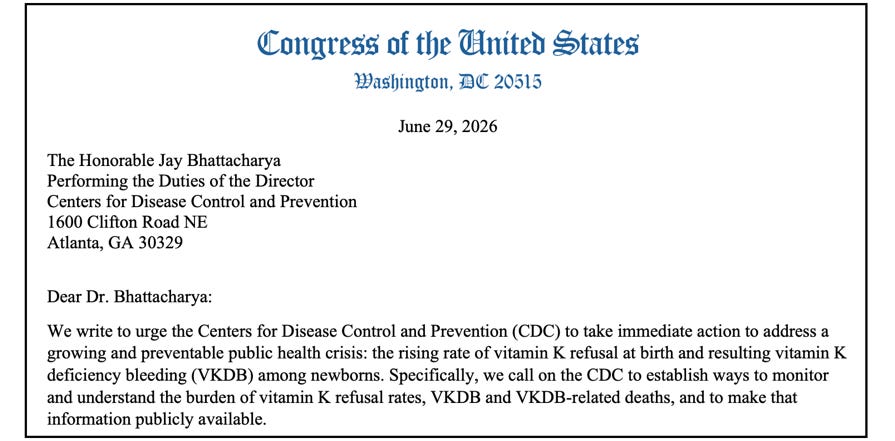
Last month, Senator Angela Alsobrooks and Representative Kim Schrier urged Acting CDC Director Jay Bhattacharya to begin tracking vitamin K refusal rates nationally, along with cases of vitamin K deficiency bleeding and associated deaths.
The rise in refusals has largely been attributed to “misinformation.” But that explanation is too simplistic.
Many parents simply want to know exactly what product is being offered to their newborn, what alternatives exist, why recommendations differ between countries, and what evidence supports the specific product they are being asked to accept.