

The Trump administration has already chosen its nominee to lead the US Centers for Disease Control and Prevention (CDC).
But after attending a Brownstone conference in Connecticut this past weekend, I found myself reflecting on the remarks of the physician who didn’t get the job.
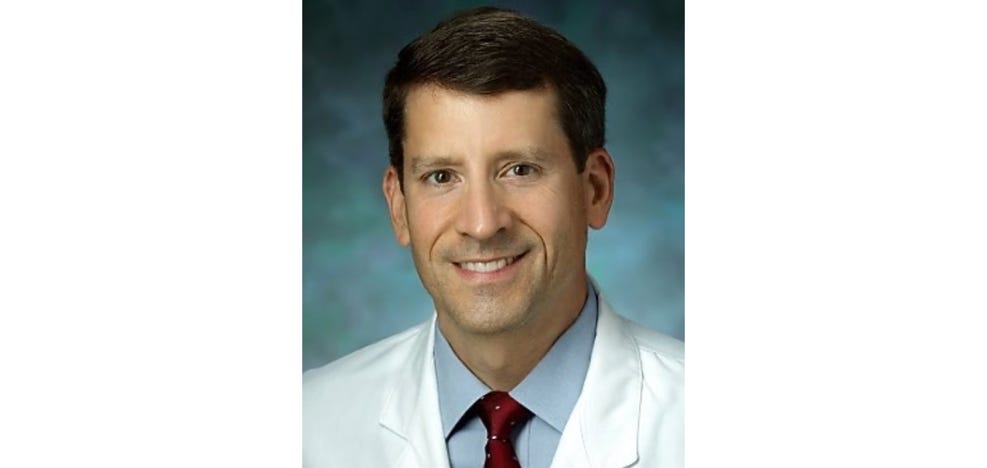
Dr Joseph Marine, a cardiologist at Johns Hopkins University who was considered for the role, delivered a remarkably candid assessment of what he believes the CDC must do if it hopes to recover from the damage caused during the Covid years.
His message is simple — before the CDC can regain public trust, it must first confront its own mistakes.
That may be easier said than done. The CDC remains one of the most influential public health agencies in the world, but after the pandemic, it is also one of the most criticised and least trusted.
Policies on lockdowns, school closures, masks, vaccine mandates, and the evidence used to justify many of those decisions have left the agency facing a crisis of credibility that could take years to repair.
Marine’s talk was not a call to dismantle the agency, but rather an attempt to answer a question that few public health leaders seem willing to ask — what does genuine reform actually look like?
His answer begins with ethics.
Public health, he argues, needs a clearer moral foundation — one that respects individual rights, acknowledges uncertainty, avoids unnecessary harm, and uses the least restrictive measures possible to achieve a public health goal.
That principle leads directly to one of his strongest criticisms of the pandemic response: lockdowns.
Marine believes the CDC should formally renounce mass lockdowns as a public health strategy.
Traditional quarantine has long been used to isolate individuals known to have been exposed to a serious threat. Locking down entire populations for months at a time was something very different.
Even if such policies could be shown to reduce transmission, Marine argues, they would still raise profound ethical questions in a free society. The social, educational, and economic costs fell disproportionately on those least able to bear them.
He is equally critical of the role “fear” played during the pandemic.
Doctors are taught that manipulating patients through fear is unethical. Public health, he argues, should be held to the same standard.
“The CDC should lead with courage and confidence, and never with fear,” he says.
Fear may produce compliance in the short term, but it comes at a cost. It damages trust, weakens social cohesion, and can leave the public feeling misled when worst-case scenarios fail to materialise.
Another lesson, he says, is the importance of acknowledging uncertainty.
One of the defining failures of the pandemic response was the tendency to present unsettled questions as ‘settled science.’ Yet science advances through questioning, testing, and revising conclusions as new evidence emerges.
Marine says that the CDC should become more comfortable saying “we don’t know” when the evidence is uncertain, rather than projecting confidence that the data do not support.
That concern extends to the quality of evidence behind public health recommendations.
Marine argues that too many pandemic-era policies rested on observational studies, modelling assumptions, or expert opinion rather than strong clinical evidence.
He cites examples such as six-foot distancing rules, masking recommendations for young children, and prolonged school closures — policies that, in his view, were often presented with greater certainty than the underlying evidence justified.
As a cardiologist, he points to cardiovascular medicine as a model. Clinical recommendations are routinely graded according to the strength of the evidence supporting them. Findings from multiple randomised controlled trials carry more weight than expert opinion alone.
He says public health should adopt the same discipline.
But perhaps Marine’s most striking observation is how little reflection has occurred since the pandemic ended.
Despite what he describes as the “most significant medical event in 100 years,” there has been remarkably little effort by institutions to examine what worked, what failed, and what should be done differently next time.
In medicine, physicians routinely conduct morbidity and mortality conferences where mistakes and poor outcomes are openly reviewed. The goal is not blame — the goal is to learn.
Marine sees no reason why public health should be exempt from the same scrutiny.
He suggests the CDC could lead a national re-examination of the pandemic response through seminars, grand rounds, and public discussions that critically assess both successes and failures.
The absence of that conversation concerns him.
Marine also believes reform requires greater intellectual diversity within public health institutions.
He points to reports showing that nearly all political donations made by CDC employees went to a single political party and questions whether a broader range of perspectives has been excluded from public health institutions.
His broader point is that public trust becomes harder to maintain when an agency is perceived as politically aligned rather than politically independent.
Finally, Marine urges public health leaders to widen their focus.
Future pandemics matter, but so do the chronic diseases that kill far more Americans every year.
Heart disease, diabetes, obesity, and cancer continue to impose a far greater burden on population health than any infectious outbreak. Building a healthier population is itself a form of pandemic preparedness.
Whether the CDC is capable of reform remains an open question.
But if reform is possible, Marine’s prescription is to acknowledge mistakes, strengthen scientific standards, reject fear-based messaging, embrace uncertainty, and return to the ethical principles that should guide medicine and public health.
Dr. Marine sounds like a wonderful and honest doctor, and there is the problem. Public health in the U.S. at least is a government organization. Its decisions are politically, not scientifically, motivated. The departments staffed by the same career bureaucrats who relish dictating exactly how citizens should live their lives while waiting to collect their fat pensions. They think the public is dumb, too, so they want directives, not nuance.
We desperately need change at the CDC, were so hopeful when RFK Jr initially brought in his team. (BTW I grew up about two miles away from the CDC building.)
I can see why Marine didn't get the job, far too much 'for the people approach' at the expensive of the system and pharma