

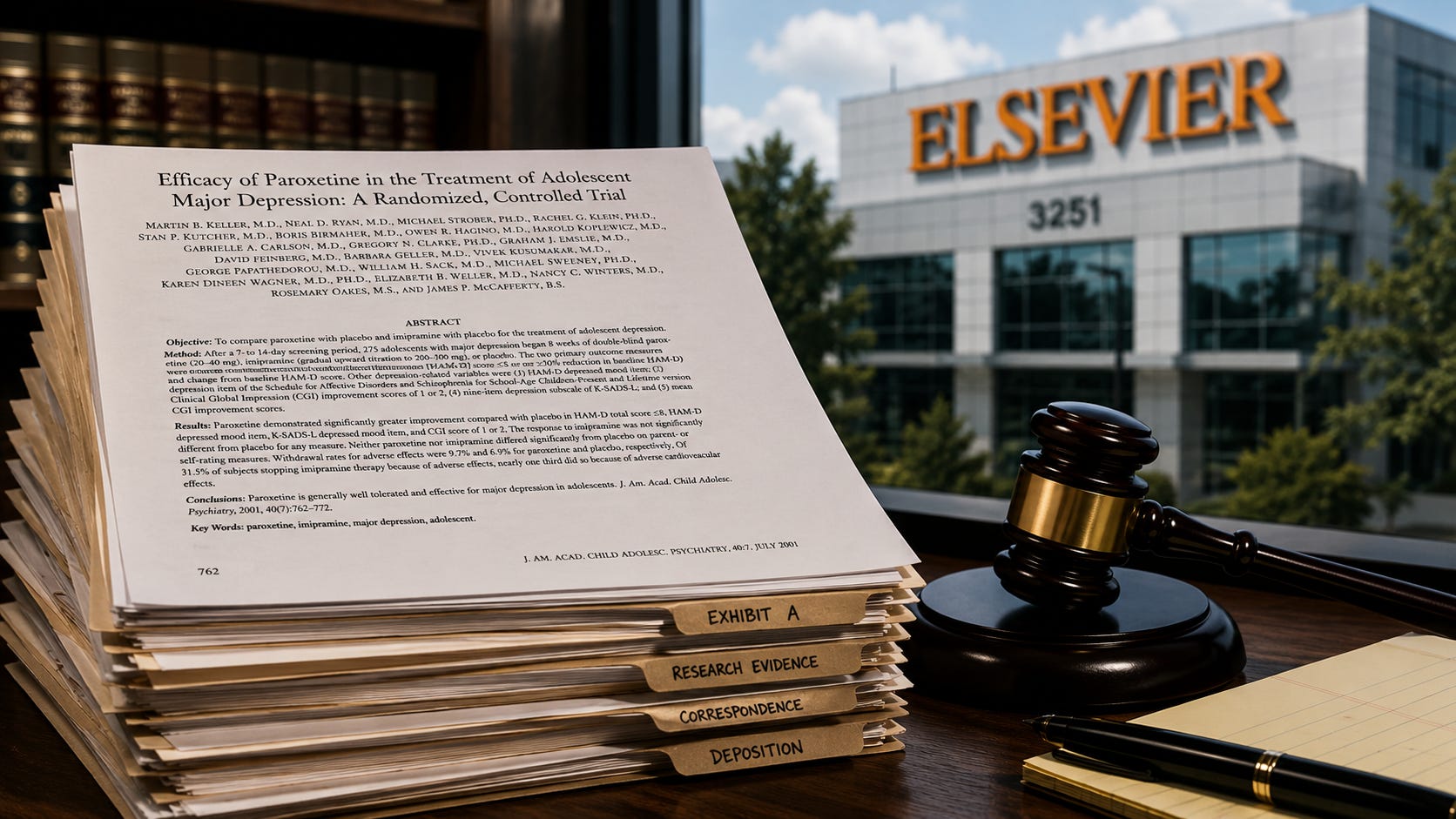
Study 329, published in the Journal of the American Academy of Child and Adolescent Psychiatry in 2001, concluded that the antidepressant Paxil was “generally well tolerated and effective” in adolescents.
It has since become one of the most controversial papers in modern psychiatry after internal company documents and subsequent legal proceedings uncovered evidence that its published findings were misleading.
Earlier this year, a lawsuit seeking to force the paper’s retraction was dismissed after a judge found the plaintiff lacked legal standing.
Now, attorney George W. Murgatroyd III has returned with a different legal strategy—one that shifts the focus from the paper itself to Elsevier’s sale of Study 329.

Instead of asking the court to order a retraction, Murgatroyd wants Elsevier to attach a corrective notice to the article before customers pay to access it through its ScienceDirect platform.
At its core, the lawsuit asks whether a publisher can continue selling a paper as trustworthy once it knows the paper no longer meets its own standards.