

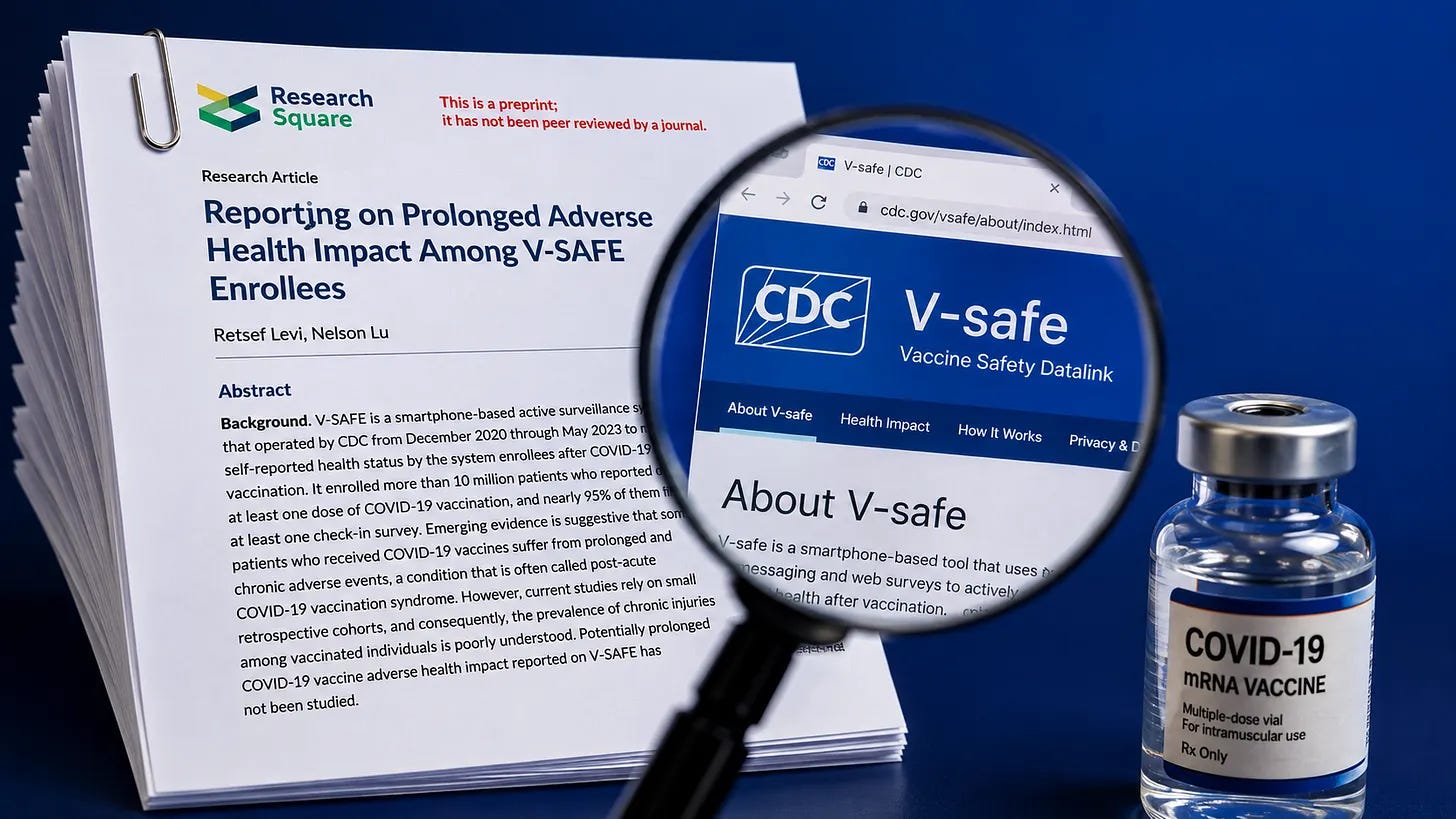
MIT professor Retsef Levi has publicly accused scientific journals of censoring research into vaccine injuries, after his latest Covid vaccine safety study was rejected by both a leading medical journal and a preprint server.
“We must counter the immense censorship by scientific journals on any discussion of vaccine injuries!” Levi posted on X.
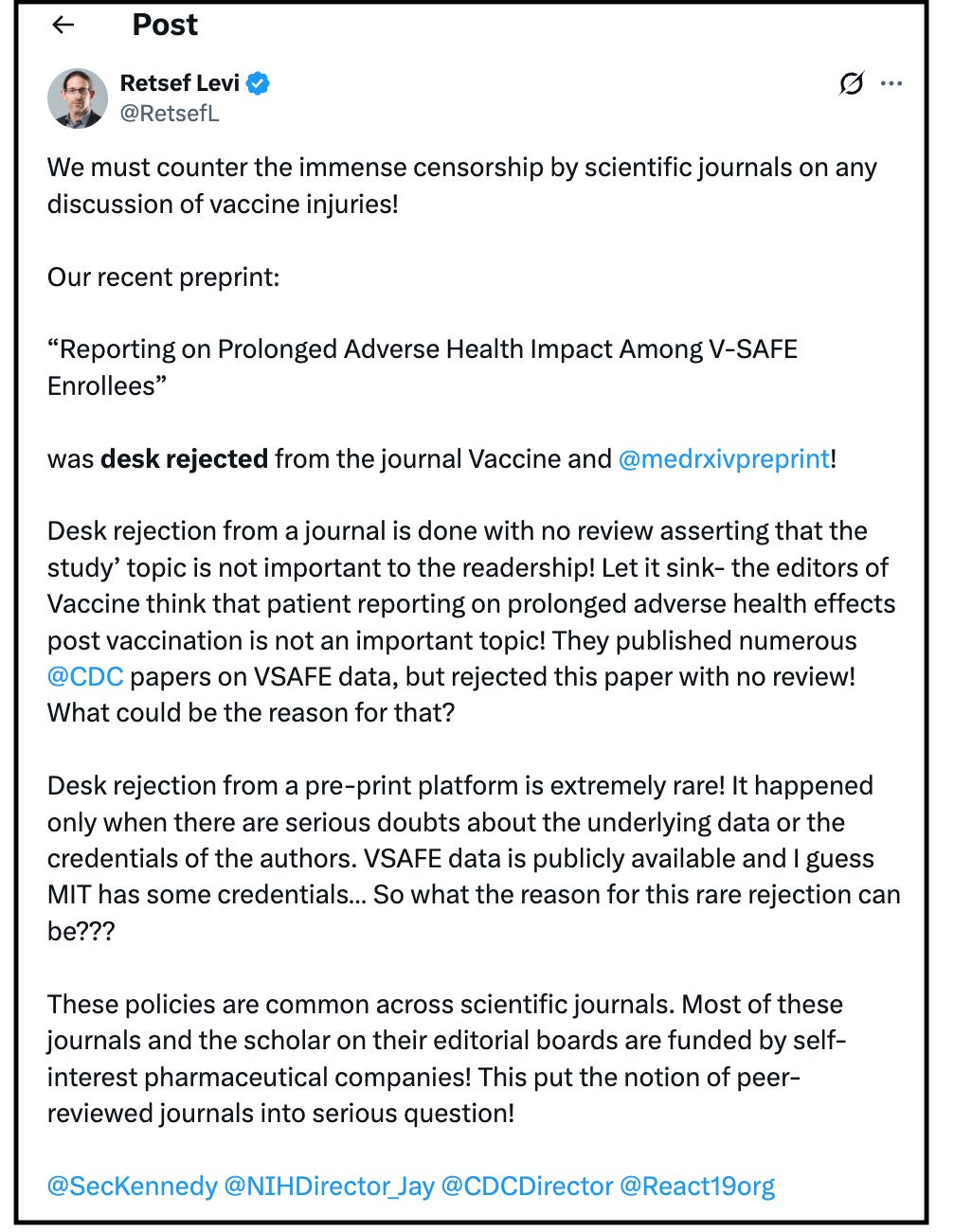
As previously reported, Levi’s study, co-authored with MIT researcher Nelson Lu, analysed responses from nearly 10 million participants in the CDC’s V-SAFE surveillance system and identified a potential safety signal that the researchers say warrants further investigation.
But before the study appeared as a preprint on Research Square, Levi and Lu struggled to get it through the scientific publishing system.
Their experience mirrors that of others trying to publish research on post-vaccination health outcomes
Emails obtained exclusively by MD Reports reveal what happened behind the scenes.
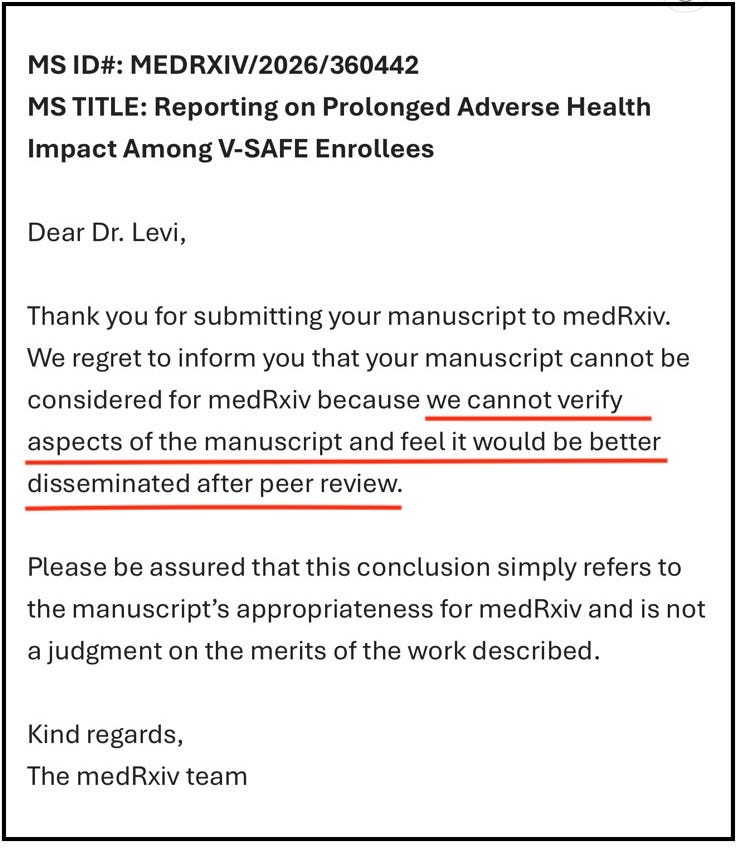
The researchers first submitted the paper to medRxiv, a preprint server established to disseminate health-science research before formal peer review.
It was rejected.
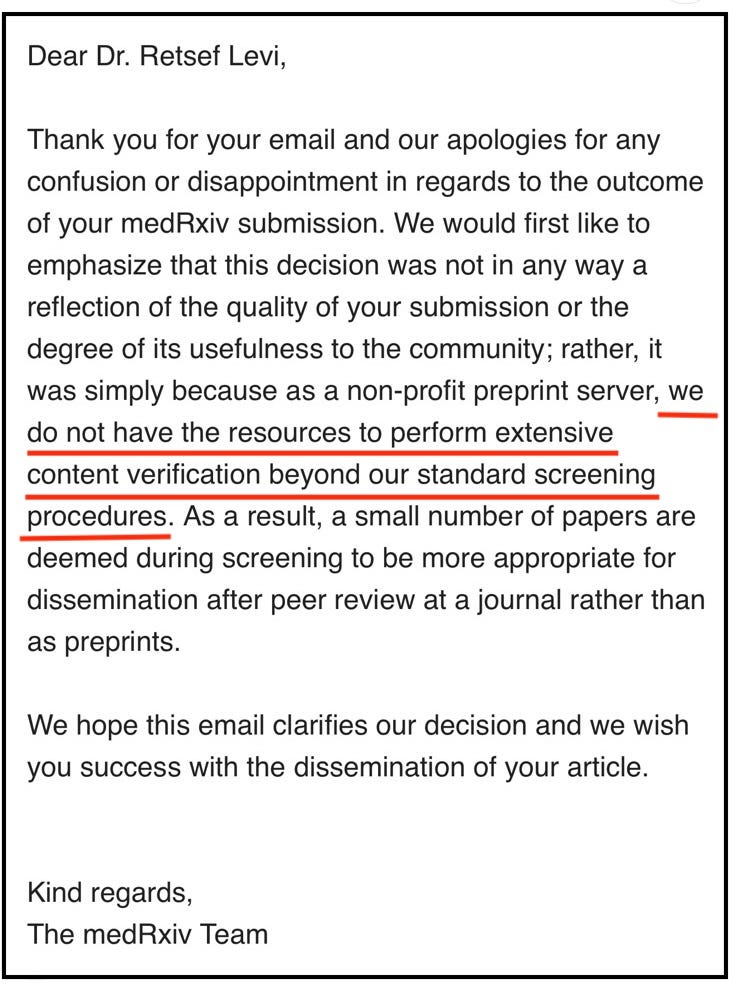
“We cannot verify aspects of the manuscript and feel it would be better disseminated after peer review,” medRxiv told the researchers.
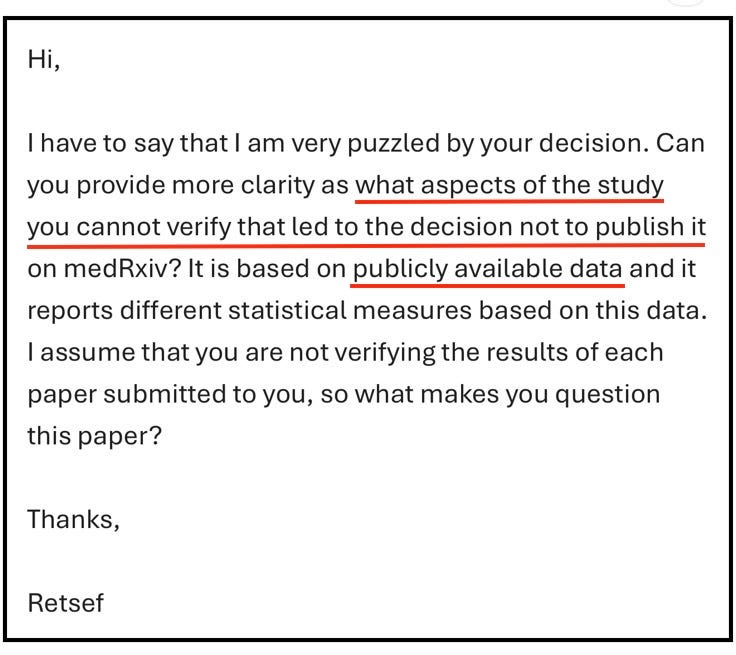
Puzzled by the response, Levi asked medRxiv to identify the specific concerns preventing publication, pointing out that the analysis relied entirely on publicly available V-SAFE data.
medRxiv responded that it lacked “the resources to perform extensive content verification beyond our standard screening procedures,” yet failed to explain what about the study required such verification in the first place.
When Levi pressed again, medRxiv explained that submissions undergo a “two-step screening process” involving affiliate scientists, but stressed that this did not constitute full peer review.
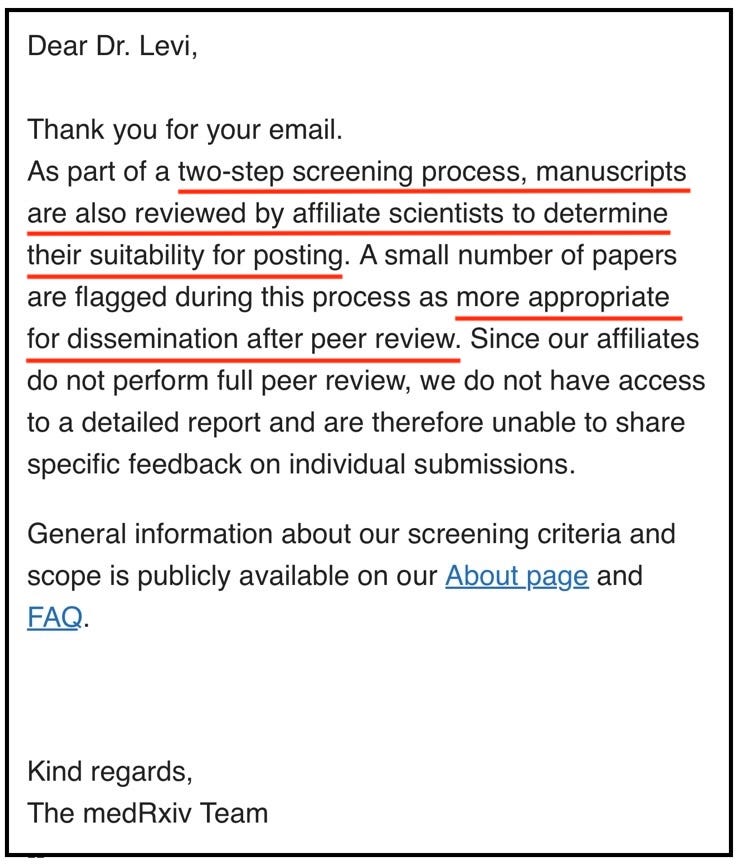
Left without a specific scientific or methodological reason for the rejection, or even the identities of the affiliate scientists who had screened their paper, Levi eventually published the study on a different preprint server, Research Square.
Levi and Lu then turned to the peer-reviewed literature.
Rejected without peer review
They submitted the study to Vaccine, a specialist scientific journal that has published extensively on vaccine safety.
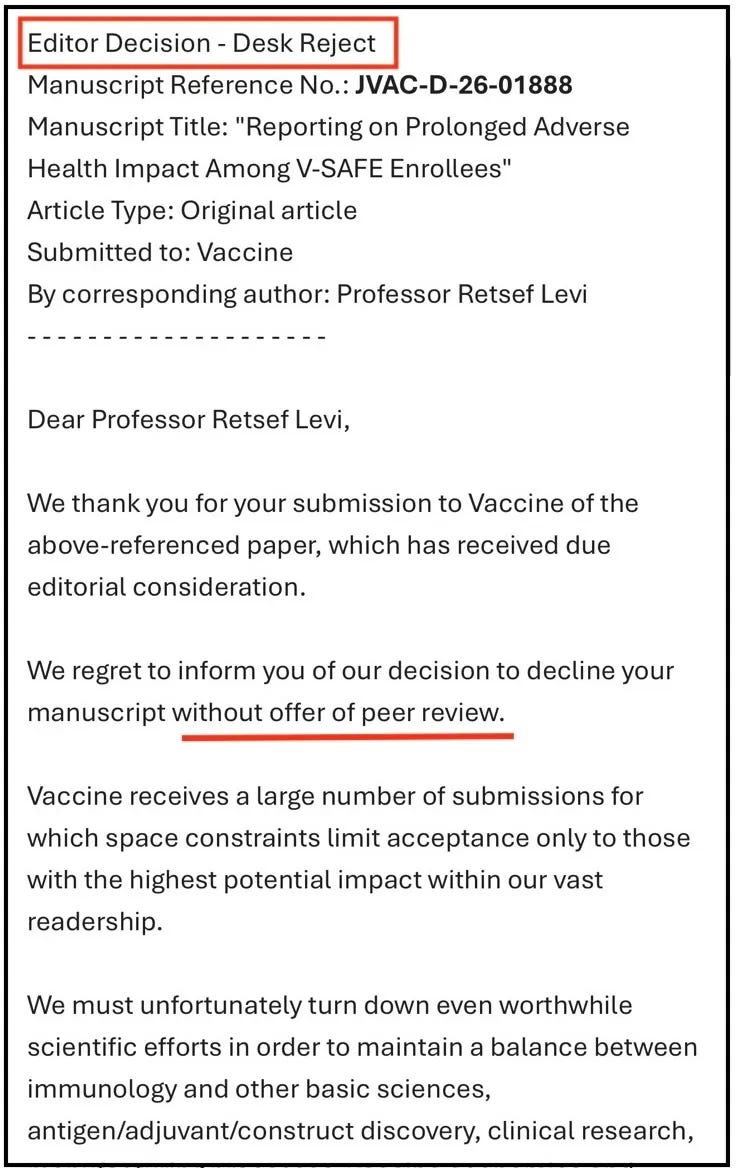
The editors issued a “desk rejection,” turning it down before peer reviewers ever saw it.
The journal explained that it receives far more papers than it can publish, forcing it to select those judged to have the “highest potential impact” while maintaining editorial balance.
The rejection correspondence reviewed by MD Reports identified no specific methodological or scientific problems with the paper.
Levi wrote back.
“I am admittedly very surprised to receive this desk rejection, particularly because Vaccine has published multiple CDC studies on the same V-SAFE data, including one very recently,” he said.
“The rejection without even sending it to referees gives the perception that Vaccine publishes some scientific findings and censors others.”
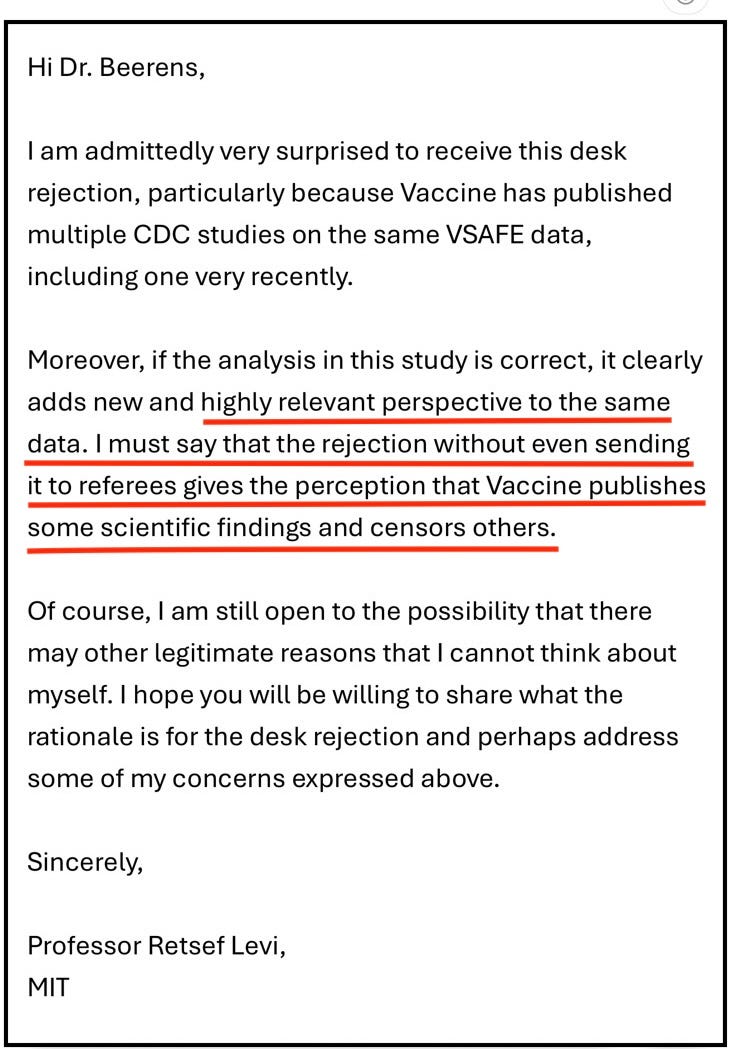
Open to alternative explanations, Levi asked the journal to clarify its reasoning, but received no response.
Same database, different outcome
Levi’s comparison is striking. Just weeks earlier, Vaccine had published a CDC study analysing the exact same V-SAFE database.
Published online on 30 June 2026, it examined reports from almost 10 million V-SAFE participants through to June 2023.
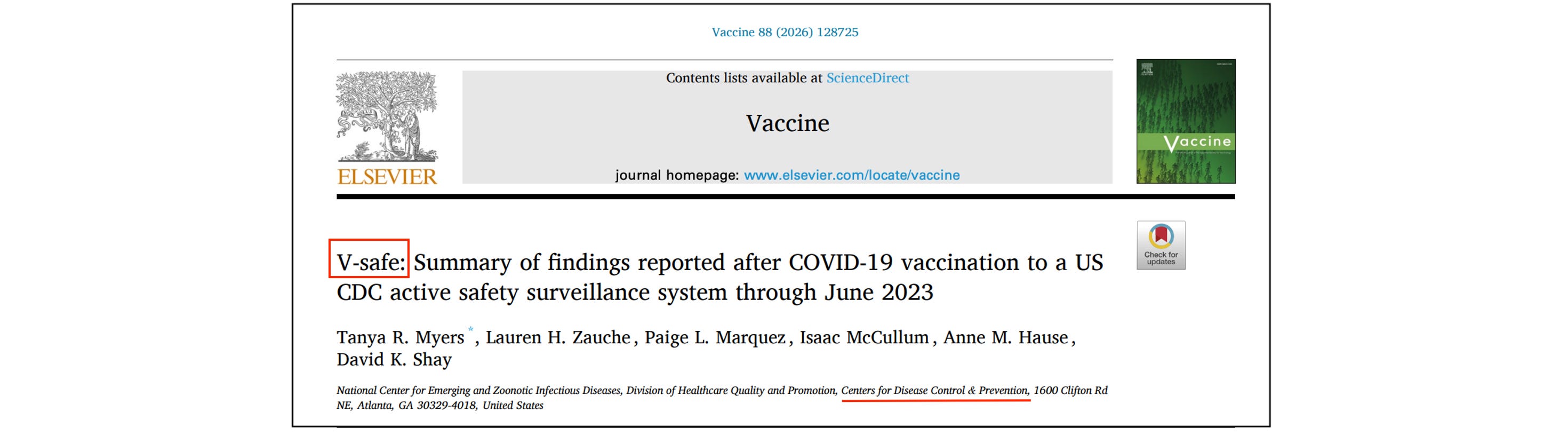
But unlike Levi and Lu’s study, the CDC’s findings were largely reassuring.
Emergency care and hospitalisation following vaccination were reported infrequently, which the authors noted was consistent with previous V-SAFE analyses and clinical trials.
Levi and Lu, however, asked a fundamentally different question.
Focusing on reports of prolonged health deterioration, they found that 185,285 participants—1.87%—reported worse health lasting at least three months that they attributed to Covid vaccination.
They argued that this finding represented a potential safety signal requiring further investigation.
Although both studies examined the same surveillance system and roughly the same number of participants, they produced very different findings — and had very different experiences in the publishing system.
The peer-review problem
Levi and Lu are not the only researchers studying reports of vaccine injuries after Covid vaccination whose work remains outside the peer-reviewed literature.
Researchers at Yale have been studying such cases through the university’s LISTEN study.
In November 2023, they posted an analysis on medRxiv describing 241 adults who self-reported what the authors called “post-vaccination syndrome,” or PVS.
Participants reported persistent symptoms including exercise intolerance, excessive fatigue, numbness, brain fog, and neuropathy.
Nearly three years later, that study remains a preprint.
In 2025, Yale researchers published a second preprint comparing 42 people reporting PVS with 22 healthy controls. They identified differences in immune profiles, more frequent evidence of recent Epstein-Barr virus reactivation, and elevated levels of circulating spike protein in the PVS group.
That study also remains a preprint.
There is, however, an interesting contrast.
Both Yale studies passed medRxiv’s “screening process,” whereas Levi and Lu’s did not.
One key distinction is that Harlan Krumholz, a co-author of the Yale research, is also a co-founder of medRxiv and serves on the board of openRxiv, which oversees the preprint server.
Why bother with peer-review?
For all its limitations, peer review remains an important marker of legitimacy in medical publishing. Research that has not passed through the process can readily be dismissed as “only a preprint.”
This creates a particular problem for controversial research.
Studies can become trapped in scientific limbo—publicly available, but lacking the imprimatur that often determines whether their findings are taken seriously.
Levi and Lu encountered that problem from both directions.
medRxiv told them their V-SAFE analysis would be better disseminated after peer review.
Yet when they submitted it to Vaccine for precisely that purpose, the journal rejected it before peer reviewers ever saw it.
Double standards
The contrast becomes more striking when considered alongside another study that Vaccine recently did choose to publish.
Just last month, the journal published online an observational study comparing cardiac outcomes following Pfizer vaccination with those following SARS-CoV-2 infection in more than four million people aged 16 to 25.
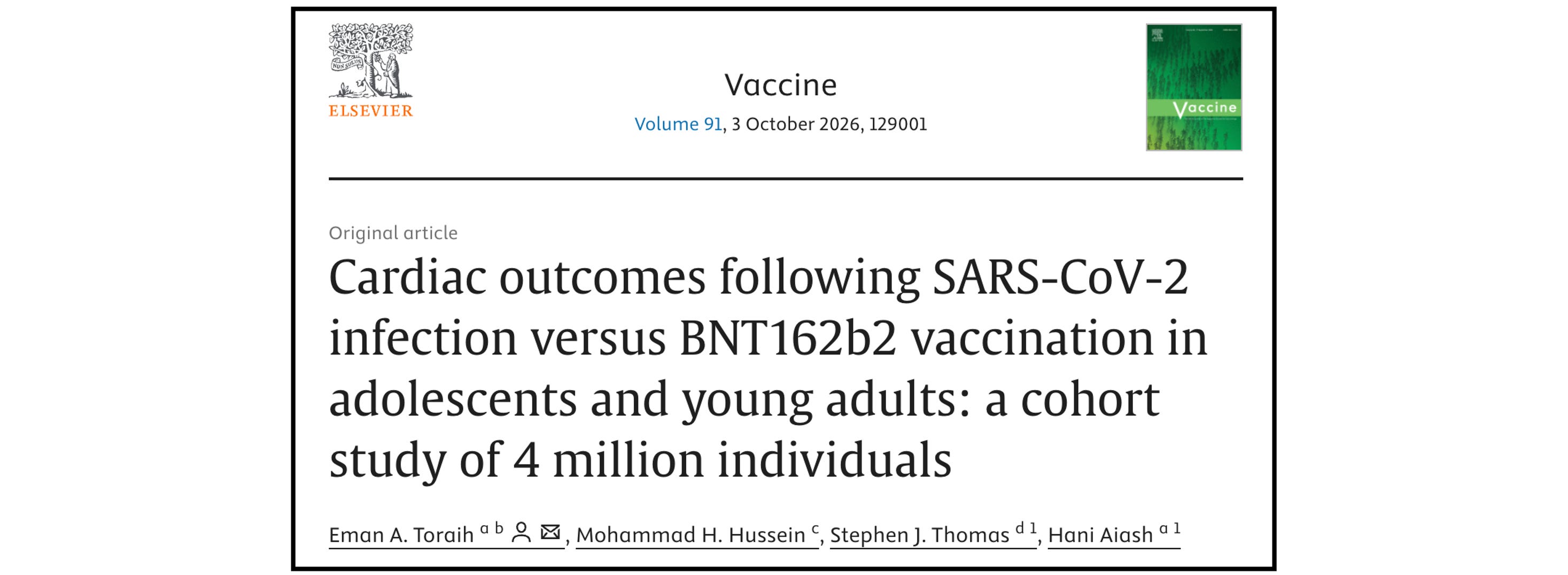
Its conclusions were highly reassuring.
The authors reported that the risks of myocarditis, pericarditis, and death were lower after vaccination than after infection — findings that strongly favoured vaccination in young people.
But Levi considered the methodology deeply problematic and posted a scathing critique on X.
“It is so outrageously flawed raising the question whether Vaccine is a scientific journal or purely propaganda operations,” he wrote.
His criticism centred on how the comparison groups were constructed.
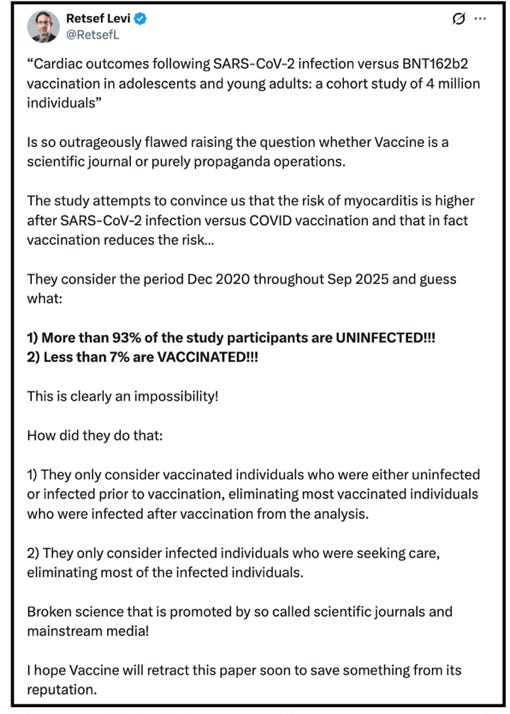
The study covered nearly five years of the pandemic (December 2020 to September 2025), but classified more than 93% of participants as “uninfected” and fewer than 7% as vaccinated—proportions Levi labelled “impossible.”
He argued that the study excluded vaccinated individuals who later caught the virus, while only counting infected people who sought medical care.
In his view, these exclusions skewed the comparison to make vaccination appear artificially safer than infection.
“I hope Vaccine will retract this paper soon to save something from its reputation,” he added.
For Levi, the contrast is difficult to reconcile.
A reassuring observational study that he argues contains serious methodological flaws cleared peer review and was published by Vaccine.
And yet his analysis of CDC safety-surveillance data, which identified a potential vaccine safety signal, was turned away without peer review.
A broader problem
The episode has also drawn the attention of US Senator Ron Johnson, chairman of the Senate Permanent Subcommittee on Investigations, who has spent years investigating the federal government’s handling of Covid vaccine safety signals.
Johnson says Levi’s publishing difficulties reflect a broader failure by authorities to investigate and address the concerns of people reporting vaccine injuries.
“The deliberate hiding of dozens of mRNA injection safety signals early in 2021 is the biggest government scandal in my lifetime, so it doesn’t surprise me at all that Dr. Levi had trouble publishing his analysis of V-Safe.”
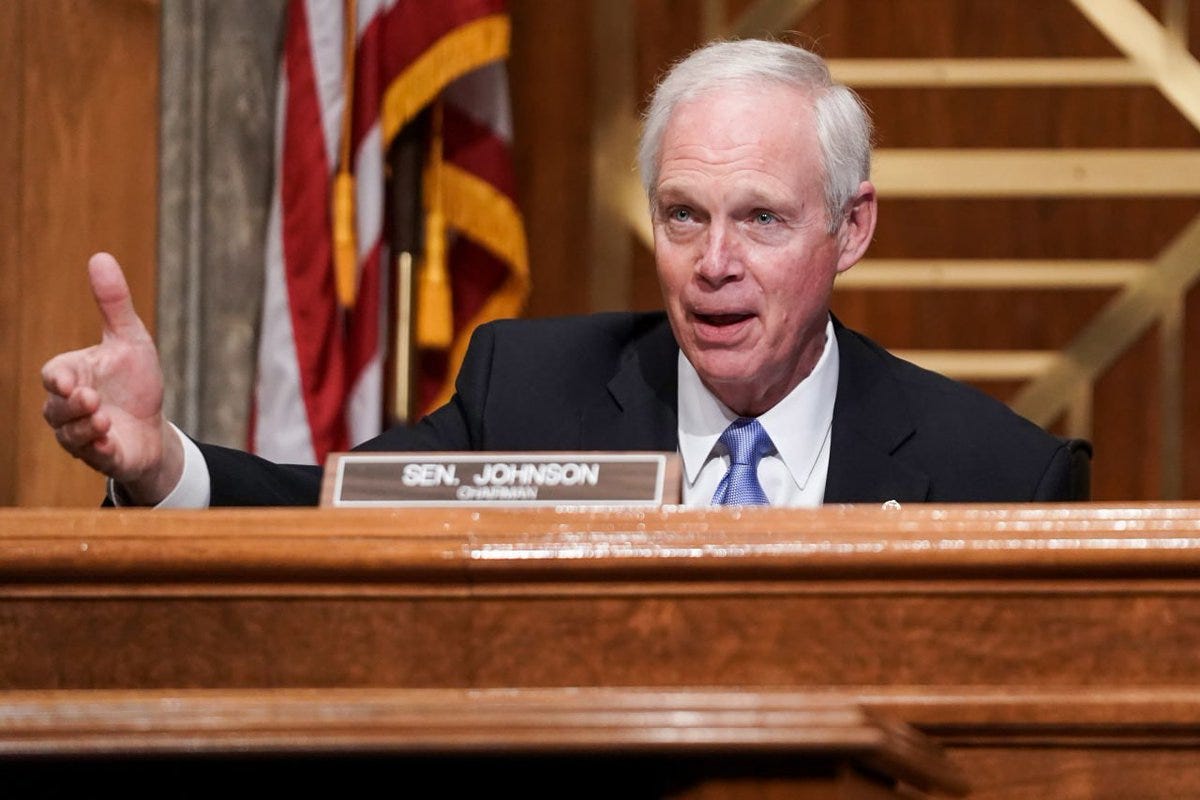
After several years of oversight into what he described as the failed Covid response, Johnson said he had reached a troubling conclusion.
“I have concluded that science, medicine, federal health agencies, and government as a whole (worldwide) are thoroughly and potentially irredeemably corrupt.”
His criticism targets the FDA and CDC, the federal agencies charged with monitoring vaccine safety.
“I think these agencies are hopelessly captured,” he said, adding that “every time one of their tools showed a safety signal, they denigrated the tool and stopped using it.”
Johnson said he would be happy to enter Levi and Lu’s study into the Congressional Record, and insisted the CDC must follow up with V-SAFE participants reporting prolonged post-vaccination health issues.
“Absolutely. Without question,” Johnson said.
Levi, meanwhile, intends to continue submitting the study for formal peer review.
Not many in the public know that many medical journals derive a portion of their income from reprints of key studies sold back to the pharmaceutical companies for the purposes of marketing.
This practice creates a key conflict of interest, deterring editors from potentially publishing anti-industry studies, knowing this might affect the financial viability of the journal in the future.
Furthermore, such practices are not common elsewhere in academia. Nor should they be.
It would be interesting to know when reports of myocarditis in connection with covid first appeared.
I don't recall hearing about a single case of SARS-CoV-2-related myocarditis in 2020. And the strains of covid were more virulent at that time.
I am happy to be corrected on this.