Today, Professor Wafik El-Deiry will testify at a U.S. Senate hearing titled, “Plausible Mechanisms of COVID-19 Injections Causing Cancer and Attacks on Scientific Publications.”
The hearing will examine not only the biological mechanisms by which mRNA vaccines may contribute to cancer, but also what lawmakers describe as attacks on scientific publications and the researchers behind them.
For El-Deiry, those two issues have become inseparable.
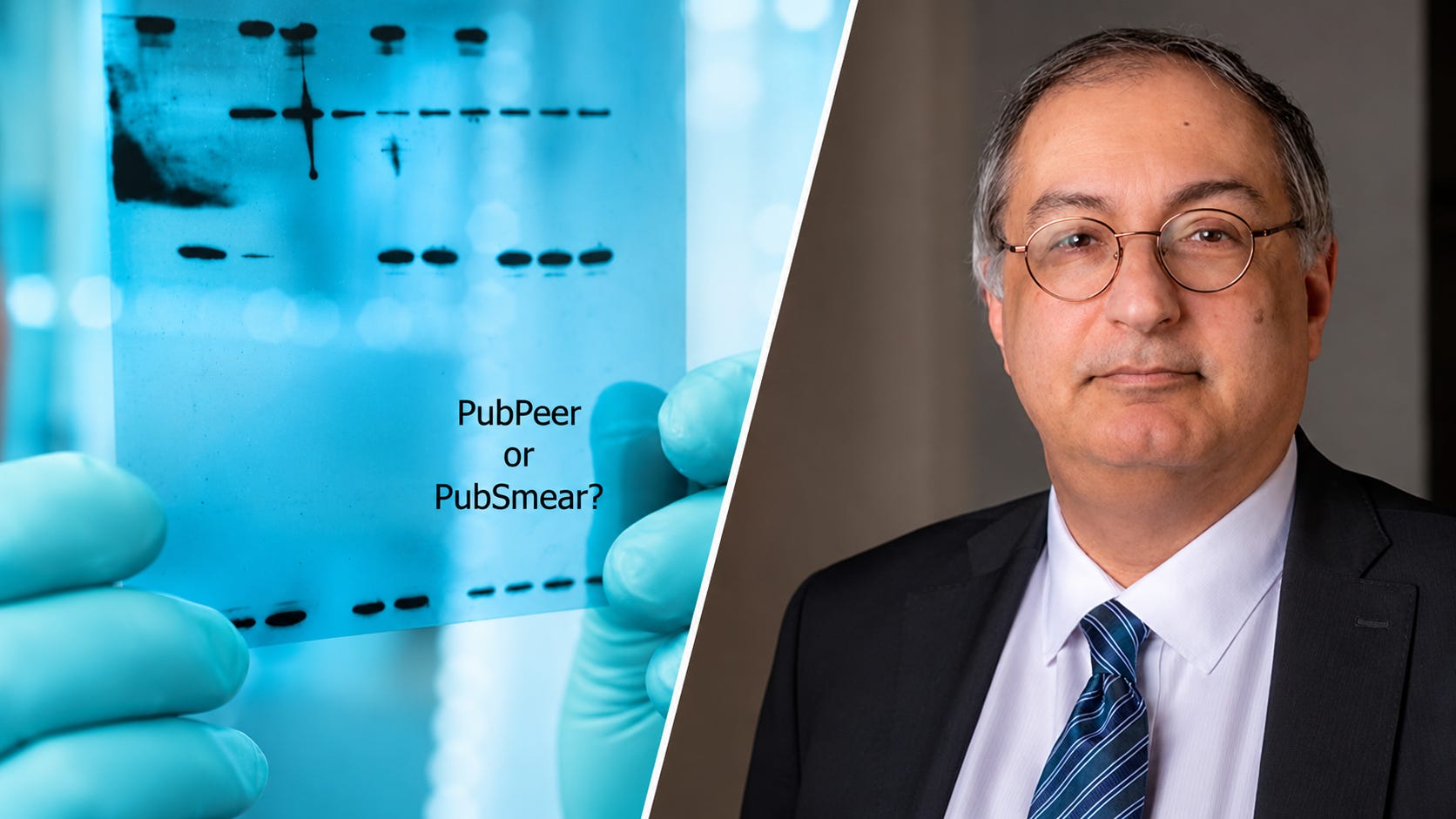
For nearly two years, the Brown University cancer researcher has found himself under sustained attack on PubPeer, a website originally created to improve scientific accountability through post-publication peer review.
PubPeer began with good intentions.
It was launched as a digital extension of the peer review process—an open forum where scientists could flag concerns about published research and continue scrutinising research beyond the walls of academic journals.
At its best, PubPeer offered a space for scientists to highlight genuine errors, expose unethical practices, and improve the quality of the scientific record.
But somewhere along the way, critics say, that mission got lost.
In recent years, PubPeer has morphed into something darker. Anonymous users now comb through scientific papers not to improve science, but to discredit scientists—often over minor, debatable, or decades-old issues.
Critics argue that the platform has become a vehicle for reputational attacks rather than constructive scientific critique.
These anonymous commenters often operate behind pseudonyms. Increasingly, their targets are not fraudsters or charlatans, but respected researchers whose work challenges prevailing narratives or powerful interests.
And when these serial complainers succeed in forcing a correction, investigation, or retraction, it is often celebrated not as a service to science but as a trophy—a scalp to display.
Some have built entire careers around hunting alleged misconduct, earning financial rewards, media attention, speaking engagements and public recognition.
Critics call them something else — vigilantes.
They argue that PubPeer has created a system where anonymous individuals can publicly accuse scientists of misconduct, trigger institutional investigations, and inflict reputational damage without being subject to the same standards of transparency they demand from others.
The result, they say, is a climate of fear. Researchers are increasingly reluctant to pursue controversial questions, challenge orthodoxies, or publish findings that conflict with prevailing narratives.
The risk is not merely criticism, but becoming the target of a prolonged campaign of anonymous allegations that can follow a scientist for years, and shape public perceptions long before any wrongdoing has been established.
The platform has even acquired a nickname among some researchers: Pub-Smear.
El-Deiry is the latest scientist to find himself in the crosshairs.
He is no fringe figure. Over three decades, El-Deiry has built an international reputation in cancer biology, pioneered discoveries in tumour suppressor pathways, founded biotechnology companies, developed cancer therapeutics, and published hundreds of scientific papers.
More recently, he presented concerns about mRNA vaccines and cancer-related pathways to the CDC’s Covid-19 vaccine workgroup and co-authored a paper on the subject with Professor Charlotte Kuperwasser of Tufts University School of Medicine.
According to El-Deiry, the trouble began in 2024.
He published a provocative study suggesting that the SARS-CoV-2 spike protein may interfere with the p53 pathway, one of the body’s most important tumour-suppressor mechanisms.

The paper did not claim that Covid-19 vaccines cause cancer. But it raised uncomfortable questions about whether the spike protein could affect pathways involved in cancer protection, and whether future vaccines could be designed to avoid such effects.
It was a politically charged topic. And in today’s scientific climate, questioning dominant narratives can come at a cost.
Within weeks, anonymous PubPeer users were combing through decades of El-Deiry’s previous publications, alleging flaws, demanding retractions, contacting journals and institutions, and casting doubt on his integrity.
Who were they? What were their scientific qualifications? Did they have conflicts of interest? And who, if anyone, was holding them accountable?
This isn’t about shielding scientists from scrutiny or excusing fraud.
Post-publication review, when conducted transparently and fairly, plays an important role in science. Fraud should be exposed and errors should be corrected.
But there is a profound difference between flagging genuine misconduct and launching a reputational ambush against scientists whose work challenges prevailing narratives.
Science thrives on debate.
It does not thrive on anonymous policing, online vigilantism, or self-proclaimed “science sleuths” pursuing personal crusades under the guise of scientific critique.
The impact on El-Deiry’s own career has been impossible to ignore.
In April, Brown University’s Dean of Medicine announced that El-Deiry would be “stepping down” as director of the Legorreta Cancer Center after seven years in the role.
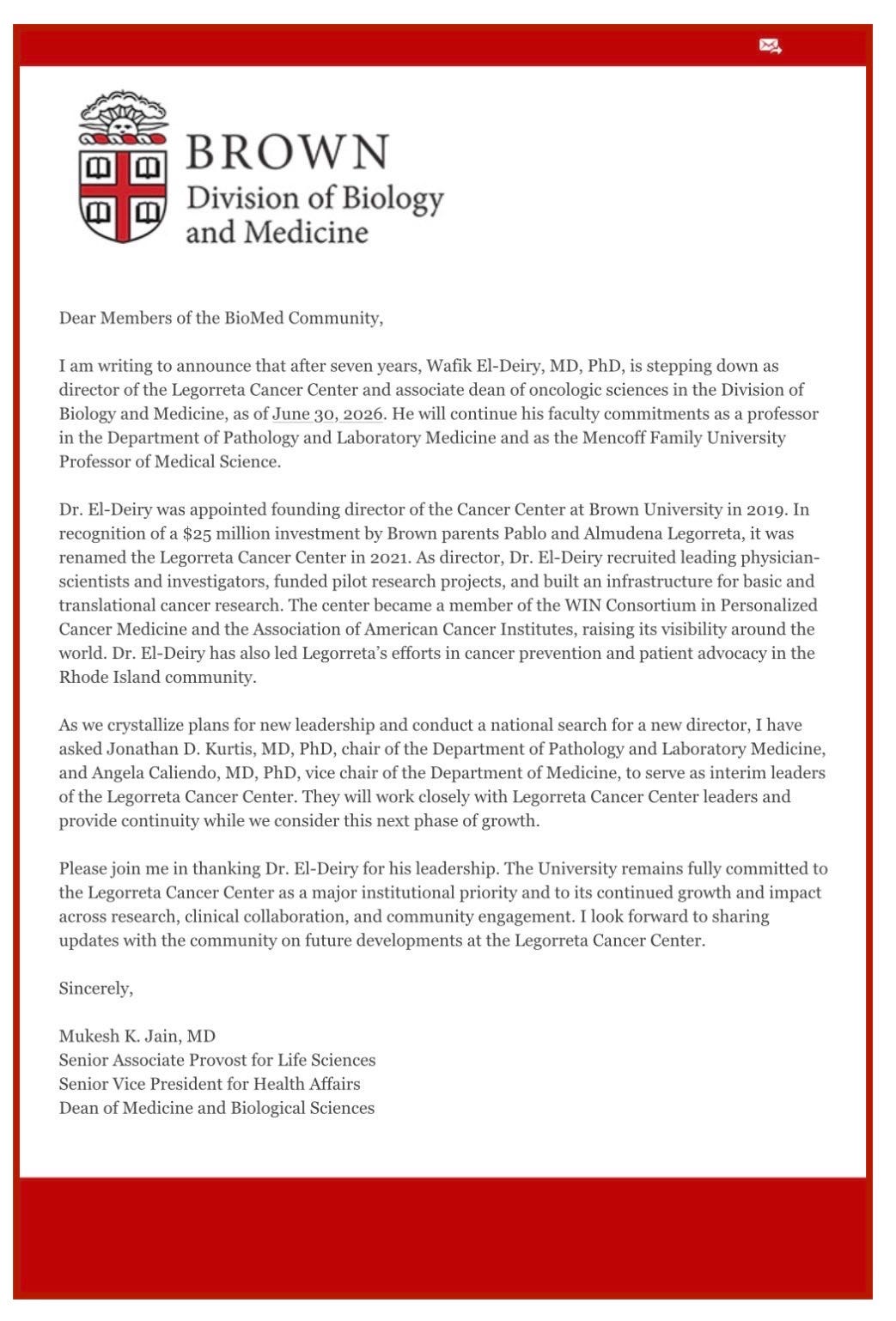
No public explanation was provided for the change in leadership.
But for many scientists following the case, the development raised uncomfortable questions about the power anonymous actors can wield over careers, institutions, and the direction of scientific inquiry itself.
In the following interview, El-Deiry discusses the personal and professional consequences of becoming a target, the impact the controversy has had on his career, and why he believes PubPeer has become something very different from what its founders originally intended.