No 'black box' warning for Covid mRNA vaccines
The FDA has rejected its strongest safety warning for Covid mRNA vaccines despite acknowledging that children were killed by the products.
After days of speculation, the US Food and Drug Administration (FDA) has ruled out placing a black box warning on Covid-19 mRNA vaccines — despite an internal recommendation to do so.
The decision did not come via a press release or formal FDA announcement.
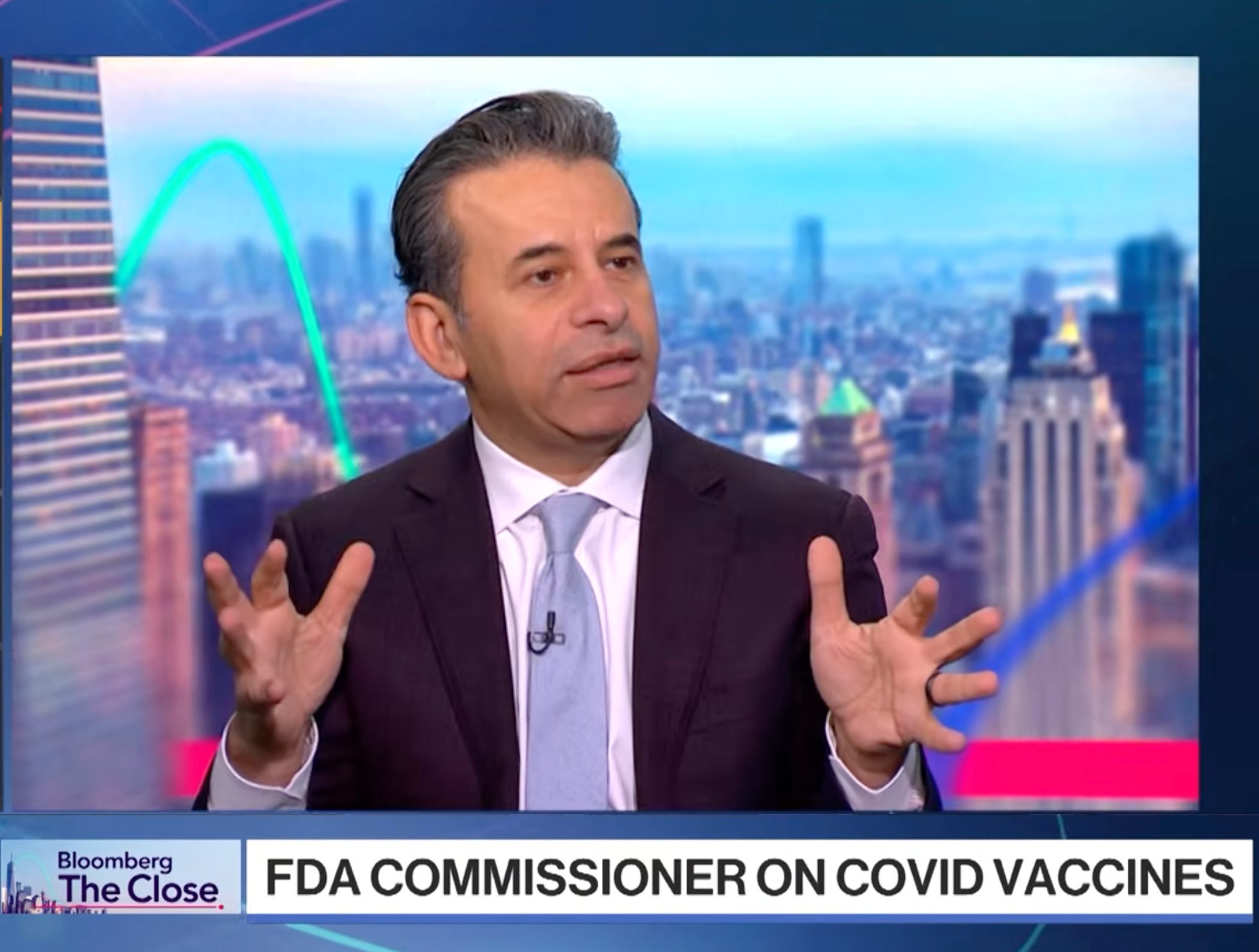
Instead, it surfaced during a televised Bloomberg interview with FDA Commissioner Marty Makary, who said the agency has “no plans” to apply its strongest safety warning to Covid mRNA vaccines.
In that interview, Makary confirmed that the FDA’s own safety and epidemiology centre had formally recommended a boxed warning — a step reserved, under FDA rules, for drugs with “special problems, particularly ones that may lead to death or serious injury.”
That recommendation was ultimately rejected.
Boxed warnings exist for a reason. They are designed to make serious risks impossible to miss — forcing doctors and patients to confront them directly before use.
During the same interview, Makary acknowledged that children had died because of Covid vaccination. He said the deaths were investigated by the FDA and discussed in congressional settings.
By the FDA’s own definition, outcomes involving death fall squarely within the scope of a boxed warning. Yet no such warning will appear on Covid vaccine labels.
When asked to explain the decision, Makary did not frame it as one he personally made. Instead, he deferred to other FDA leaders, including the agency’s top vaccine official, Dr Vinay Prasad.
According to Makary, Prasad argued that earlier safety signals should not be applied to current use, because Covid vaccines are now administered annually rather than as two closely spaced doses during the initial rollout.
“Now that it’s annual, you may not see that same prevalence,” Makary said. “So we don’t want to extrapolate findings to today if it’s not transferable.”
That reasoning sidesteps the core issue. Boxed warnings are triggered by documented harm — not by predictions about whether similar harm might recur under a modified dosing schedule.
Changing the frequency of dosing does not erase outcomes that have already occurred. Nor does it remove the obligation to clearly disclose those outcomes to people weighing vaccination today.
Indeed, boxed warnings are often applied precisely when evidence is incomplete or still evolving, because the consequences are serious. In this case, the consequences include deaths in children. Waiting for perfect certainty defeats the purpose of the warning itself.
If deaths in children do not meet the FDA’s threshold for its strongest safety warning, it is difficult to see what would.
As it stands, the official product labels for the Moderna and Pfizer mRNA vaccines do not disclose that deaths have occurred following vaccination in children, nor that FDA officials have investigated vaccine-related deaths.
A boxed warning would also have practical consequences.
Products carrying one cannot run “reminder advertisements.” Covid vaccines, however, continue to be promoted through annual public campaigns urging people to “get boosted.”
The FDA has offered no explanation for whether — or how — the impact on advertising was considered when the warning was rejected.
The decision is also difficult to reconcile with the FDA’s own regulatory history.
The agency has imposed boxed warnings on SSRI antidepressants for increased suicidality, on acne drugs for potential birth defects, and on immune therapies for elevated cardiovascular risks — often without confirmed deaths.
Against that backdrop, the refusal to apply a boxed warning to vaccines linked to acknowledged deaths, including in children, is striking.
The decision also runs counter to the direction set just weeks earlier by the CDC’s Advisory Committee on Immunisation Practices (ACIP).
In September, ACIP voted unanimously to shift Covid vaccination towards individual clinical decision-making, placing explicit weight on informed consent. To support that shift, the committee urged stronger safety disclosure in patient-facing materials, including the Vaccine Information Statement.
That makes FDA labelling more important than ever. The FDA controls vaccine warnings and product labels — the foundation of informed consent.
Yet the agency is now asking people to make individual decisions while excluding information that prompted an internal recommendation for its strongest safety warning.
A black box warning would not have restricted access to Covid vaccines. It would simply have aligned the label with what the FDA already knows — ensuring that deaths were disclosed clearly, consistently, and without minimisation.
The question now is whether informed consent is even possible when an agency acknowledges child deaths, but leaves them off the label.


"The question now is whether informed consent is even possible..."
And the answer is, there is no informed consent...
There has never been informed consent...
There is no informed consent for vaccination.
Because no-one has ever been properly informed about vaccination.
And when pressure, coercion, manipulation and mandates are in force, there can be no voluntary consent.
thank you Dr Demasi,
I will utter what is faintly heard under the breath of many Folk .. and please, pardon my French
- fuck Makary, Prasad and the FDA
.. should this echo to Bobby, too?