

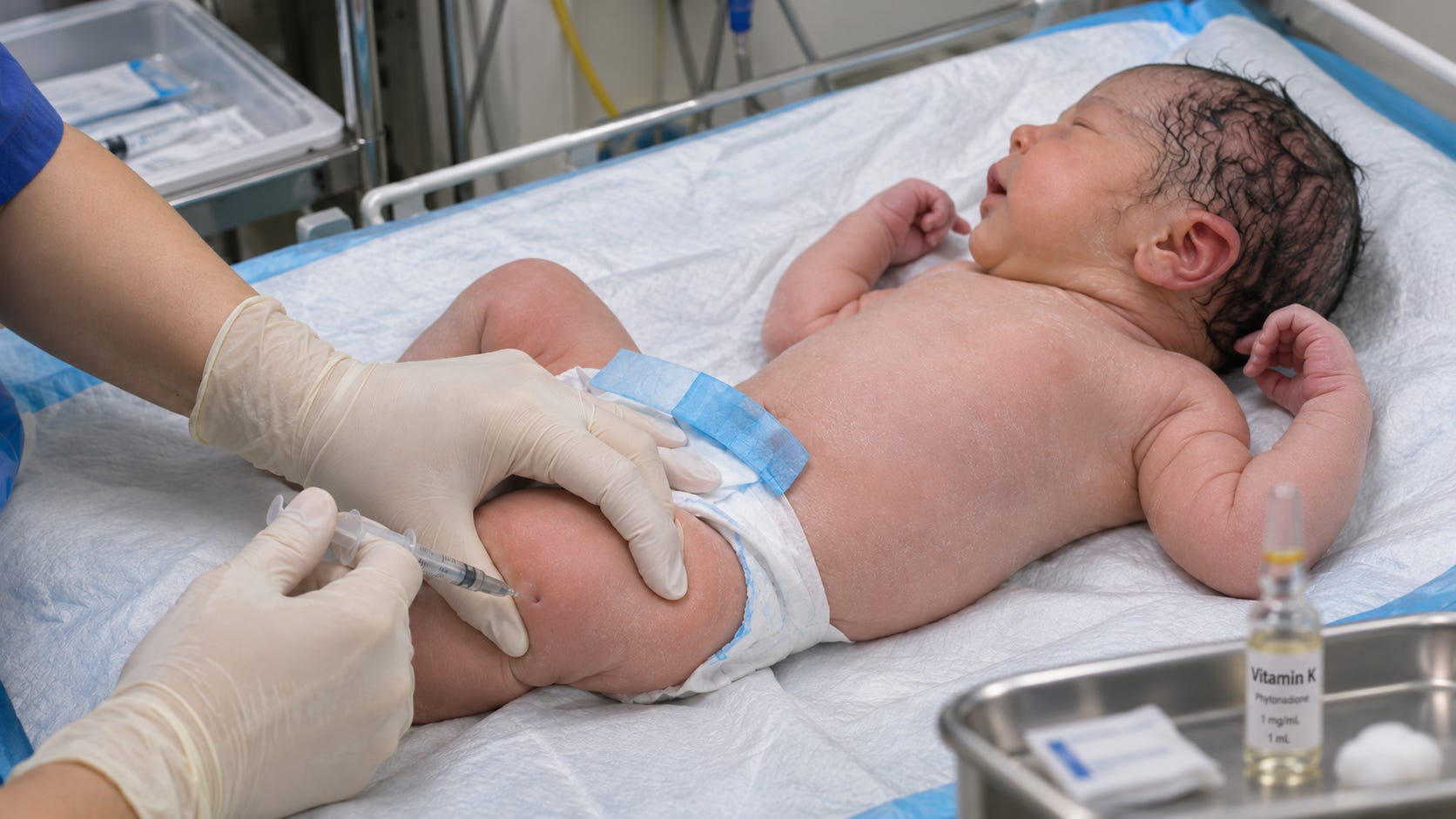
A new study published in JAMA has reignited debate over routine newborn vitamin K injections.
Analysing records of more than five million infants, the researchers reported a 47% higher risk of bleeding during the first six months of life among those without an injection.

The findings quickly attracted attention. JAMA promoted the study, while an accompanying editorial called for stronger public education and policy action.
On social media, reactions were polarised.
Some critics pointed to the product’s boxed warning about fatal hypersensitivity, while others like journalist Alex Berenson declared the routine injection “a no-brainer” and the decision to forgo it “dumb.”
But when I examined the study’s original protocol and supplementary data, I found problems that raised serious doubts about the reliability of the published risk estimates — and troubling questions about how the study passed peer review.
I have previously examined the benefits, risks and reasons why some parents decline vitamin K for newborns, so I won’t revisit those arguments here.
My concern is the quality of the research now being used to influence medical decisions, particularly when independent researchers cannot readily access the underlying data to verify the findings.