

The New York Times has updated its reporting on the leaked vaccine injury report after initially failing to acknowledge that the document had already been made publicly available by MD Reports.
I contacted the paper following publication of its article to request attribution.
The New York Times promptly apologised for the oversight. Credit is due to journalists Sheryl Gay Stolberg and Apoorva Mandavilli for working to correct the story.

The leaked report — a confidential vaccine injury policy document prepared for the CDC’s Advisory Committee on Immunization Practices (ACIP) — was obtained exclusively by MD Reports and published last weekend.
Since then, it has received front-page coverage in The New York Times, bringing national attention to Covid vaccine injuries — an issue that has long struggled for recognition.
The document formed part of ACIP’s meeting materials for the March 18 session and would ordinarily have been posted publicly ahead of the meeting and presented for discussion.
There were concerns in some quarters that publication of the leaked document on MD Reports could disadvantage the vaccine-injured. But the response has been markedly positive.
Many people with Covid vaccine injuries have welcomed the release of the proposed policy, describing it as a turning point — a moment when their experiences were finally acknowledged in a formal policy context by clinicians and scientists.
That sentiment was echoed beyond patient groups.
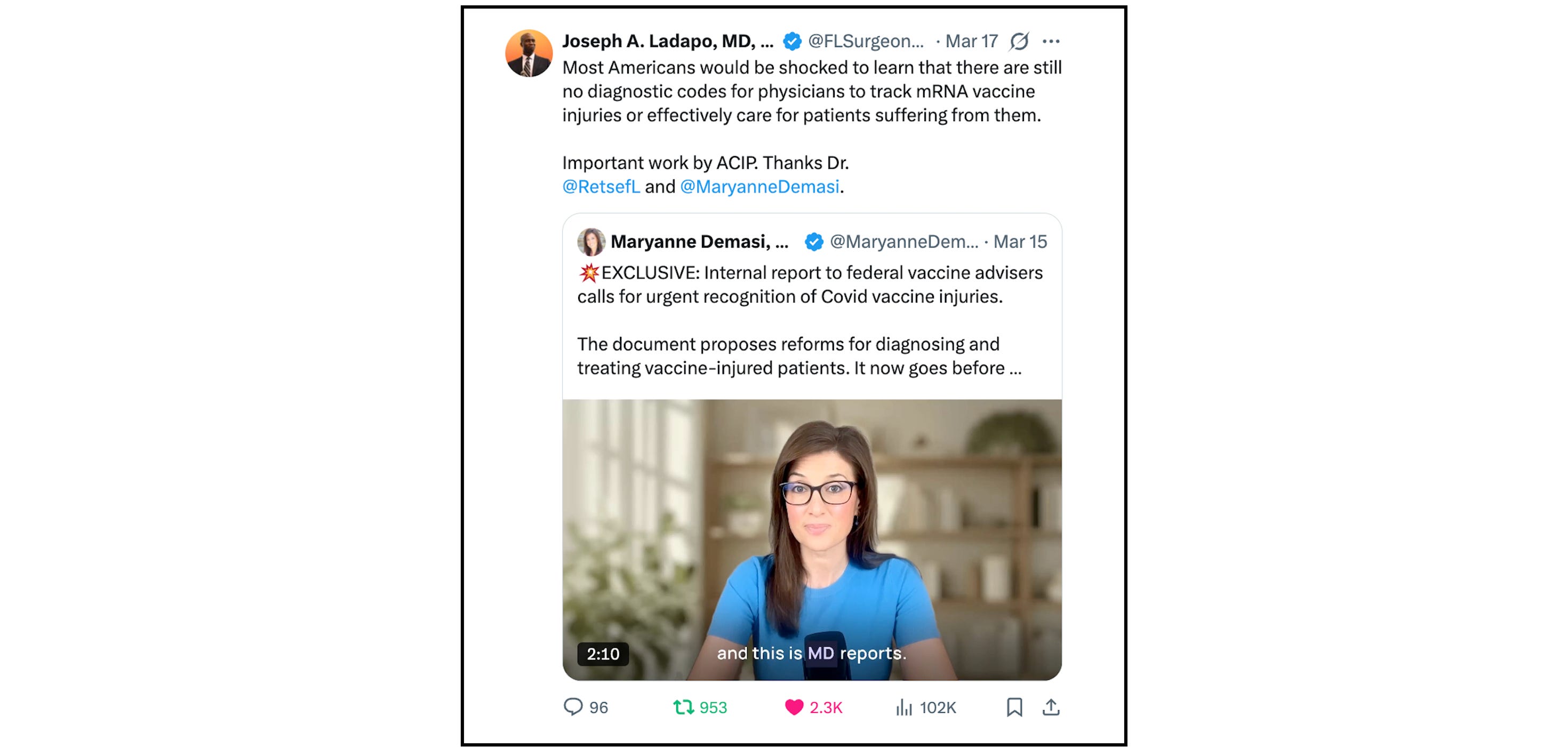
Florida Surgeon General Joseph Ladapo wrote on X that “most Americans would be shocked to learn that there are still no diagnostic codes” to track vaccine injuries or care for affected patients, calling it “important work by ACIP.”
The fact that The New York Times chose to report the story and elevate it to the front page only reinforces that shift.
Some commentary on social media has attempted to link publication of the report to the cancellation of the ACIP meeting scheduled for March 18–19. That is incorrect. The two matters are separate.
The judge’s decision in AAP v. Kennedy was based on arguments presented during hearings that took place well before the report was published. There is no indication that the judge — already working toward a decision — was even aware of the leak.

If anything, the events of the past week suggest that without publication, the report would have been delayed given the meeting’s cancellation, or potentially remained buried.
Although the cancellation of the ACIP meeting prevented public discussion of the vaccine injury report as planned, HHS officials have indicated the judge’s decision to halt the meeting is likely to be overturned.
In the meantime, the issue has continued to move forward.
On March 18, the patient advocacy group React19 announced what it described as a “breakthrough,” confirming that a proposal for a dedicated ICD-10 diagnostic code to identify adverse effects of Covid-19 vaccines has been accepted into the CDC’s formal review process.
“While this week brought unexpected challenges, progress continued,” the group stated on X.
“Today, March 18th, React19 advanced a proposal to the CDC’s National Center for Health Statistics for a dedicated ICD-10 code to identify adverse effects of Covid-19 vaccines. The proposal has now been approved to move forward in the formal review process.”
Submitted by React19 co-chair Dr Joel Wallskog, the proposal reflects one of the key recommendations outlined in the ACIP vaccine injury report.
“This marks an important step toward clinical recognition, accurate documentation, and future research,” the group said, adding that the proposal will now enter a 60-day public comment period, with the potential for inclusion in the U.S. system as early as 2027.
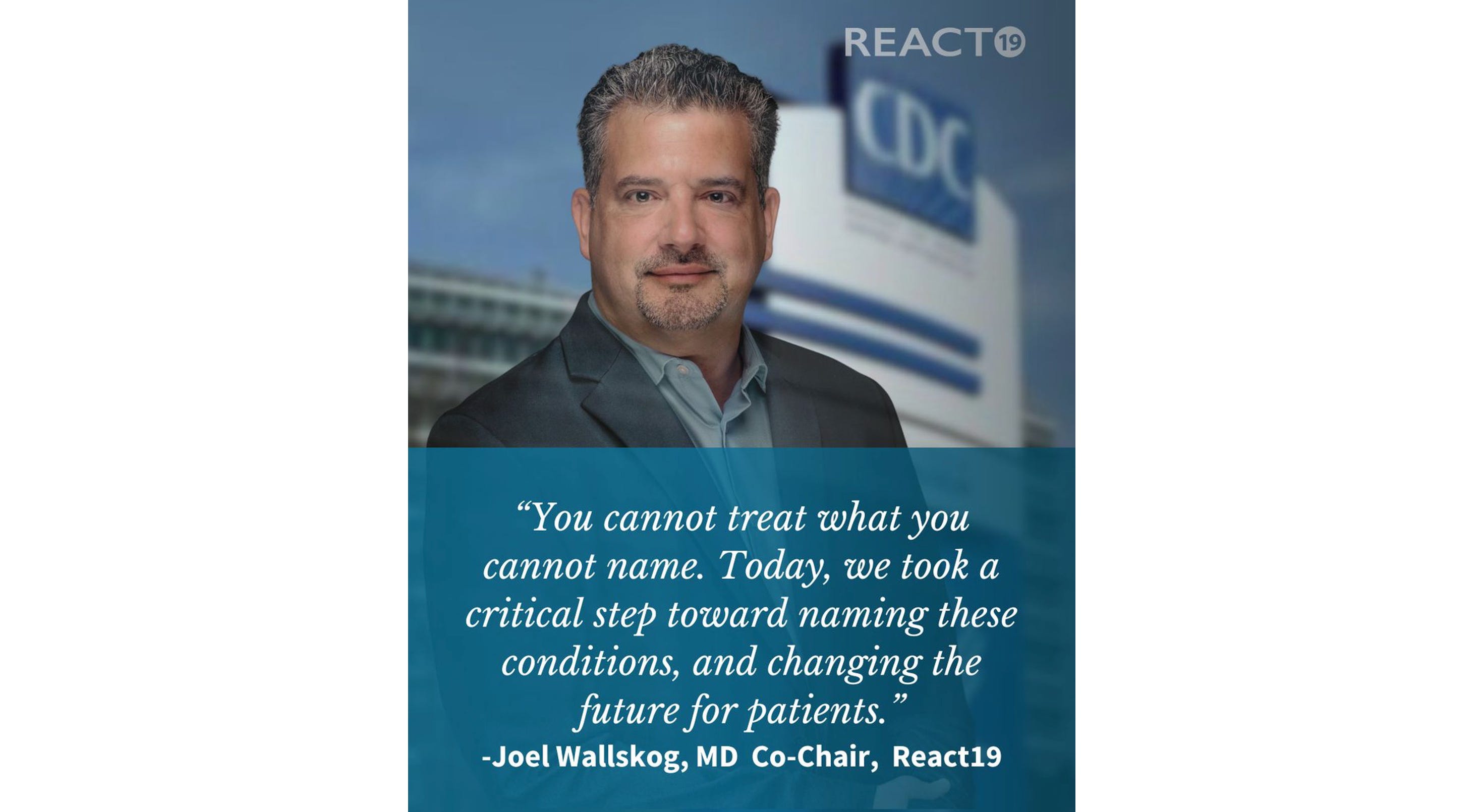
Wallskog added, “You cannot treat what you cannot name. Today, we took a critical step toward naming these conditions and changing the future for patients.”
The decision to cancel the ACIP meeting may have delayed discussion, but the report is now in the public domain.
And the conversation it was meant to inform is no longer confined to closed doors — it is finally being heard.
Fingers crossed for it being a much-needed turning point.
Smiling for you Maryanne