

For the first time since the pandemic began, a federal vaccine advisory body in the United States has acknowledged a major blind spot in the country’s vaccine safety system.
A leaked report prepared for the Advisory Committee on Immunisation Practices (ACIP) finds that many people with long-term illness after Covid-19 vaccination have gone largely unrecognised by the medical system meant to monitor vaccine safety.
The document was written by the Covid-19 vaccine workgroup advising ACIP, chaired by MIT professor Retsef Levi.
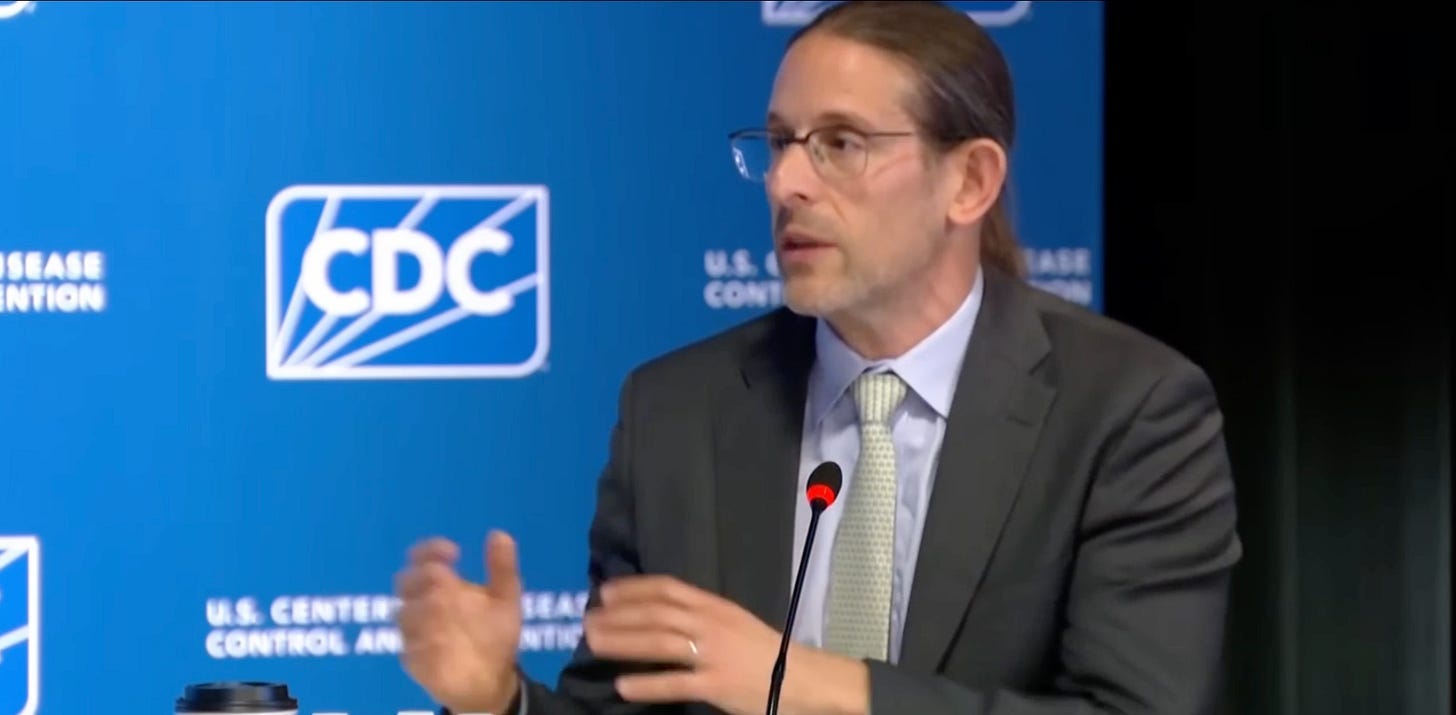
The workgroup writes that reforms are “fundamental and necessary to regain public trust in vaccination programs that have moral and bioethical obligations for solidarity, justice and equity.”
The document, obtained exclusively by MD Reports, arrives amid political sensitivities surrounding the issue. ACIP’s scheduled February meeting was abruptly cancelled without a public explanation.
A senior CDC researcher familiar with the situation, speaking on condition of anonymity, suggested the report may have been politically delicate.
“Obviously there were some politics involved when the February ACIP meeting was postponed,” the researcher told MD Reports. “But I think the workgroup itself generally supported the document.”
The researcher added that they “wholeheartedly support” the policy document, noting that it is “long overdue to acknowledge and treat the vaccine-injured.”
The report has not yet been publicly released and is expected to be discussed at ACIP’s upcoming meeting on March 18–19. Levi declined to comment.
The system’s blind spot
The report focuses on what it calls Post-Acute Covid-19 Vaccination Syndrome, or PACVS.
The term refers to symptoms that persist for at least 12 weeks after vaccination and cannot be explained by another medical condition.
Patients with PACVS often present with complex, multi-system illness. Symptoms may involve the nervous system, the cardiovascular system, the immune system, the endocrine system and the autonomic nervous system.
The clinical picture varies widely. Some people develop severe fatigue, cognitive impairment, neuropathy or dysautonomia.
Others experience chest pain, immune disturbances or endocrine problems. Symptoms often fluctuate and evolve over time, making early diagnosis difficult.
Clinical features frequently overlap with long Covid — including fatigue, cognitive impairment, dysautonomia, neuropathy, chest pain and immune disturbances.
Yet many patients fall into a diagnostic no-man’s-land, particularly in the early stages of illness.
Some eventually meet criteria for recognised conditions such as postural orthostatic tachycardia syndrome (POTS), small fibre neuropathy or ME/CFS.
But even then, the path to recognition can take years.
The workgroup argues that these difficulties do not necessarily reflect the absence of disease. Instead, they reflect the limits of the systems used to detect and classify illness.
The surveillance gap
A major problem identified in the report is the limitations of existing surveillance systems.
The United States has multiple systems designed to detect vaccine injuries, but most were built to capture acute reactions — events that occur within days or weeks of vaccination.
Persistent, evolving illness does not fit easily into those frameworks.
In practice, vaccine injuries are mainly tracked through broad diagnostic codes and passive reporting systems such as the Vaccine Adverse Event Reporting System (VAERS).
These systems depend heavily on clinicians recognising a problem and reporting it.
But when symptoms develop gradually, involve multiple organs, or resemble other conditions, they are far harder to classify.
The report notes that there is currently no specific diagnostic code for chronic post-vaccination illness. There are also no standard diagnostic guidelines and no coordinated system for long-term follow-up.
The result is a fragmented landscape.
Doctors struggle to document cases, insurance claims may be rejected and patients may move between specialists without a unifying diagnosis.
When cases are recorded inconsistently, they rarely appear clearly in aggregated safety data. That can create the impression that such injuries are rare — even when the surveillance system itself is unable to detect them properly.
The workgroup also raises a troubling clinical concern.
Some patients who developed symptoms after their first vaccine dose were advised, and in some cases pressured, to continue vaccination. Some reported that their symptoms worsened after subsequent doses.
The report concludes that the failure to recognise injury has distorted risk–benefit assessments, compromised patient care and eroded public trust.
Three reforms
The workgroup proposes three reforms:
First, it calls for the creation of specific ICD-10 diagnostic codes for persistent post-vaccination illness.
Diagnostic codes are the backbone of modern healthcare: without them, conditions cannot be reliably documented, reimbursed, researched or incorporated into guidelines.
The report notes that when long Covid received its own code, recognition and surveillance improved rapidly.
Second, it recommends formal diagnostic guidelines and clinician training.
Many post-vaccination illnesses do not appear on standard medical tests. Recognising them may require clinicians to evaluate patterns of symptoms and disease evolution rather than relying solely on laboratory findings.
Most doctors have never been trained to recognise vaccine injuries in that way.
Third, it proposes a national network of specialist centres for long Covid and post-vaccination injury, coordinated by the CDC.
Modelled on the Children’s Oncology Group, such a network would pool expertise, standardise care, collect biospecimens and follow patients longitudinally — shifting surveillance from passive reporting to active investigation.
What happens next?
The proposal will now go before ACIP for consideration.
The next ACIP meeting, scheduled for March 18–19, will be the first real test of whether this moves from paper to policy.
If adopted, the recommendations would mark a profound shift in how vaccine injuries are recognised, monitored and treated in the United States.
For injured patients and their families, this is more than a policy document. It signals formal recognition after years of dismissal — validation after being told their suffering was imagined or coincidental.
For clinicians who have tried to care for these patients without clear guidance, the proposals could provide long-overdue diagnostic pathways.
At its core, the report is both an admission and a blueprint: an acknowledgment that the safety systems failed to capture complex, persistent harm and a plan to correct it.
The question now is straightforward.
Will the system act — or retreat?
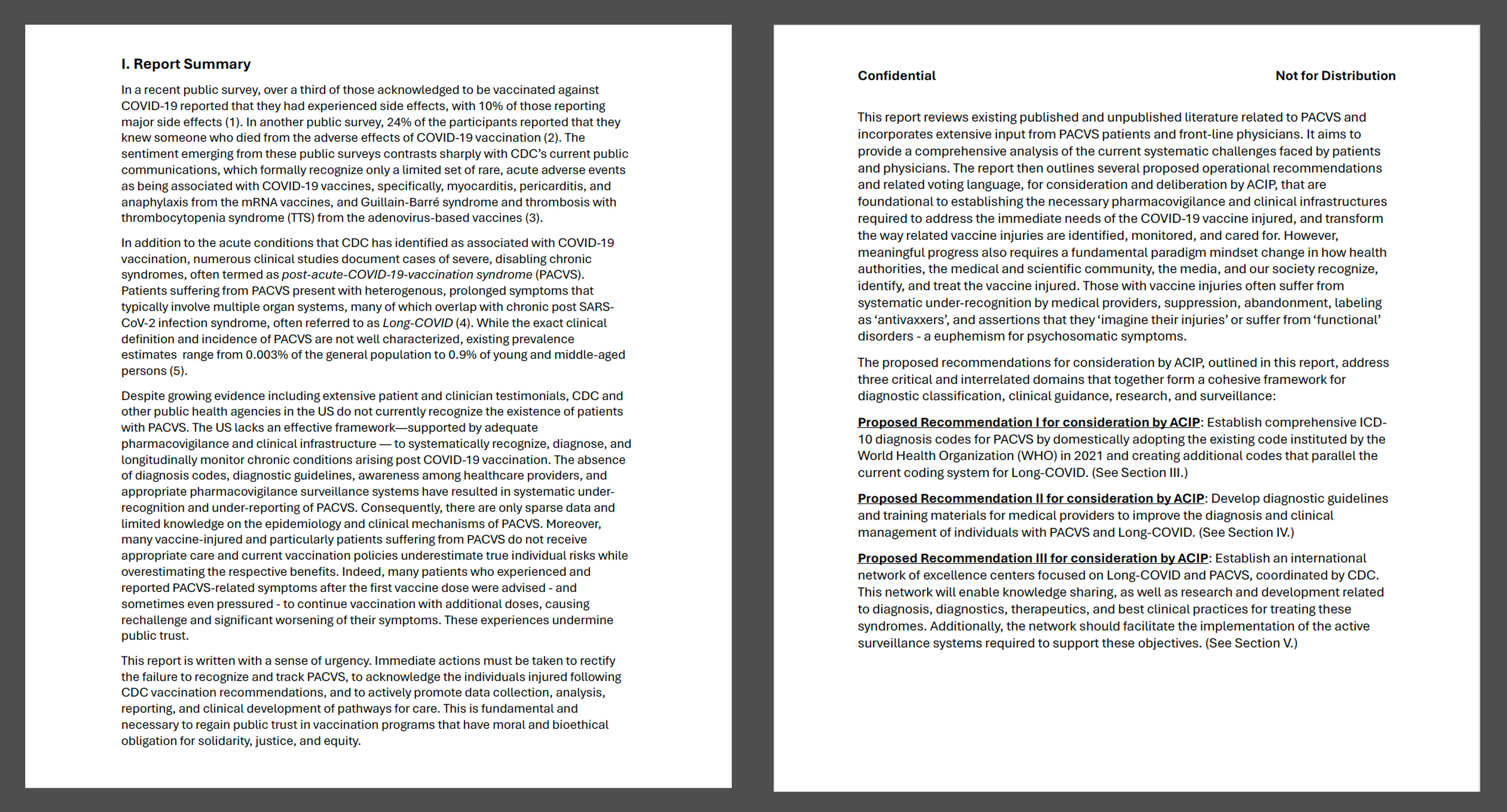
FULL DOCUMENT:

FURTHER READING:
Is it long Covid or vaccine injury?
ACIP launches sweeping Covid-19 vaccine review under Retsef Levi
EXCLUSIVE: Retsef Levi unveils new members of his Covid vaccine work group


